
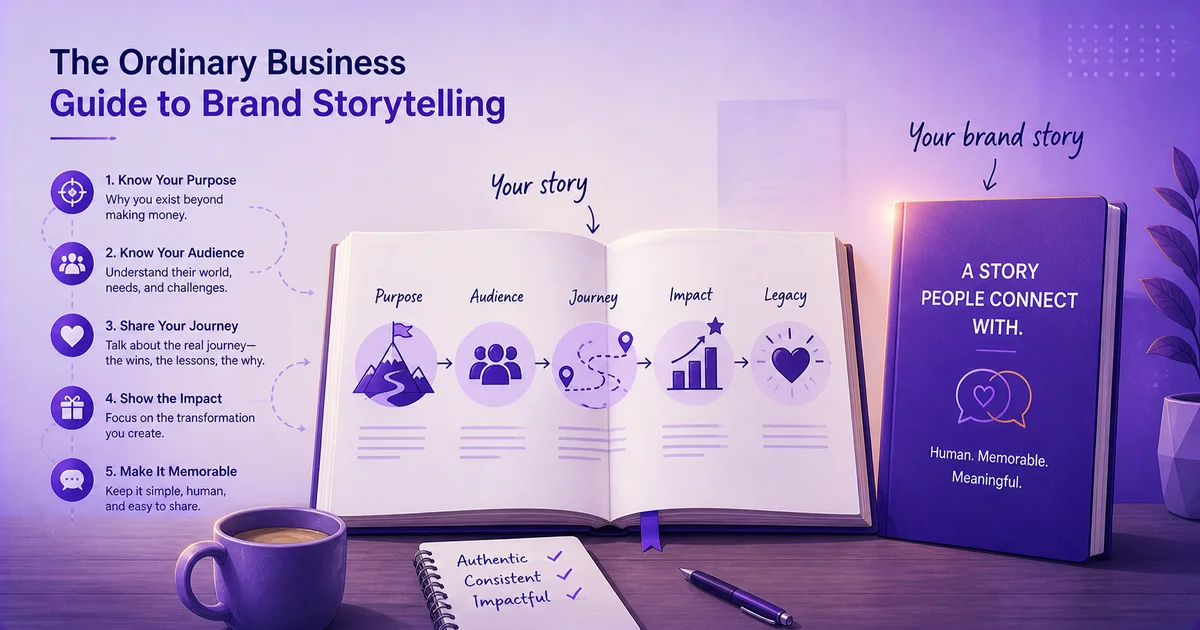
Every business has a story worth telling, even if it doesn't feel that way. When you're running a service firm, retail shop, or professional practice, authentic brand storytelling can feel impossible. You're not disrupting industries or changing the world—you're solving everyday problems for real people. But that's exactly what makes your story powerful.
Building a compelling brand story doesn't require drama or world-changing missions. It starts with understanding your customers' real struggles, positioning them as the hero of their journey, and showing how your business guides them to transformation. The most effective brand stories come from ordinary businesses that help ordinary people overcome genuine obstacles in their daily lives.
Why Every Business Already Has Story Elements
You might think your accounting practice, local restaurant, or consulting firm lacks story-worthy material. But every business that serves real customers already has the core elements of great storytelling: conflict, transformation, and human connection.
The conflict isn't always obvious because it's woven into your daily work. Your customers come to you with problems—financial stress, time constraints, skill gaps, or unmet needs. These aren't dramatic movie conflicts, but they're real pain points that affect people's lives and work.
Harvard Business School emphasizes that effective brand storytelling starts by identifying customer conflicts: "What does your customer yearn for? What's missing in their life?" The answer lies in the problems you solve every day, even if they seem mundane to you.
Your transformation stories are hiding in plain sight. Every satisfied customer represents a before-and-after story. The small business owner who finally understands their finances. The family that found the perfect home. The professional who learned a critical skill. These everyday transformations are the foundation of authentic brand storytelling.
The Three-Part Framework for Ordinary Brand Stories
Start with Your One-Word Theme
Business of Story's approach suggests identifying your brand's central "one thing" as a one-word theme. Airbnb chose "Belonging"—not because they're extraordinary, but because they understood what their customers truly wanted.
Your one-word theme should capture the core emotional outcome your customers experience. A financial advisor might choose "Security." A restaurant could pick "Comfort." A consultant might select "Clarity." This isn't about what you do—it's about how your customers feel after working with you.
Think about the conversations you have with satisfied customers. What words do they use to describe their experience? What emotional state do they describe reaching? Your theme often emerges from these real customer outcomes.
Apply the And, But, Therefore Structure
Once you have your theme, use the ABT (And, But, Therefore) framework to build your narrative. This structure, demonstrated effectively by Airbnb, works for any business:
"We all want [your theme]. And [context about why this matters]. But [the obstacle that prevents this]. Therefore, we created [your business] so [the solution you provide]."
For example, a local accounting firm might say: "Every business owner wants financial security. And making smart money decisions requires clear information. But financial statements and tax codes are confusing and overwhelming. Therefore, we translate your numbers into plain English so you can make confident business decisions."
This framework transforms ordinary business functions into customer-centered narratives. You're not just providing a service—you're removing obstacles that stand between your customers and their desired outcomes.
Share Real Customer Stories
The most powerful element of your brand story comes from authentic customer experiences. The Write Copy Girl emphasizes using real examples like the Dwoskin Family Foundation, which "weaves real impact stories of communities supported and lives changed to create emotional resonance."
Your version doesn't need to involve global impact. A plumbing contractor might share how they restored hot water for a family with young children during a cold winter. A business consultant could tell about helping a struggling restaurant owner regain confidence and profitability.
These stories work because they feature real people facing genuine challenges—challenges your other potential customers recognize and relate to. The transformation doesn't need to be dramatic; it needs to be meaningful to the people experiencing it.
Making Your Customers the Hero
Traditional brand storytelling often makes the business the hero of the story. This approach fails because customers don't want to hear about how great you are—they want to see themselves succeeding.
Pete & Gerry's approach demonstrates this principle effectively. Their CMO notes: "It's so critical to be relevant to what matters to them." The company positions customers as heroes addressing problems in the egg industry, with Pete & Gerry's serving as their guide.
Your customers are the protagonists of your brand story. They face challenges, make difficult decisions, and work toward better outcomes. Your role is to guide them through this journey, providing tools, expertise, or solutions that help them succeed.
This shift in perspective changes everything about how you tell your story. Instead of talking about your qualifications or achievements, you focus on customer challenges and victories. Instead of explaining your processes, you describe the transformation customers experience.
Finding Drama in Ordinary Problems
Every customer problem contains natural drama, even if it doesn't seem that way. The drama comes from the gap between where customers are and where they want to be, plus the obstacles preventing them from closing that gap.
A tax preparation service deals with the drama of deadline pressure, complex regulations, and financial anxiety. A home cleaning service addresses the drama of overwhelmed schedules, family stress, and the desire for a peaceful living space. A business coach handles the drama of stagnant growth, unclear direction, and entrepreneurial isolation.
The key is recognizing that what feels routine to you creates real stress and uncertainty for your customers. Olivine Marketing notes that effective storytelling requires being "authentic by telling why customers should care about the problem you're solving in your own words with emotion and empathy."
Your expertise makes these problems seem simple, but for customers facing them, the stakes feel high. A restaurant owner worried about food costs isn't dealing with spreadsheets—they're dealing with their livelihood and their family's security.
This perspective helps you find the emotional core of ordinary business problems. Every service you provide addresses something that matters deeply to the people you serve.
Building Your Origin Story Without the Hype
Your origin story doesn't need to involve garage startups or lightning-bolt inspiration moments. The Write Copy Girl suggests focusing on "how and why the company started, initial struggles, and founder transformations."
Most businesses start because someone recognized a problem from personal experience. Maybe you started your consulting practice after struggling to find good advice during your own career transition. Perhaps you opened your restaurant because you couldn't find the kind of food you craved in your community.
These everyday origins often resonate more than dramatic entrepreneurship stories because they're relatable. Your customers can see themselves in your original situation, which helps them trust that you understand their current challenges.
Focus on the problem you experienced personally, the gap you noticed in available solutions, and the decision to create something better. Keep the focus on serving others rather than personal achievement. The most compelling origin stories explain why you care about solving the specific problems your customers face.
Avoiding Common Storytelling Mistakes
Many businesses undermine their stories by trying to sound more impressive than they are. They use corporate language, exaggerate their impact, or focus on features instead of outcomes.
FlippingBook research shows that 94% of buyers recommend brands they have an emotional connection with. This connection comes from authenticity, not from impressive-sounding claims.
Keep your language conversational and specific. Instead of saying "We provide innovative solutions," explain exactly what you do and why it matters. Instead of claiming to "transform businesses," describe the specific changes your customers experience.
Avoid the temptation to make your business sound bigger or more sophisticated than it is. Customers often prefer working with businesses they can relate to and understand. A local contractor who talks about "construction solutions" sounds less trustworthy than one who explains how they "fix problems in your home so you can enjoy living there again."
Another common mistake is making the story too long or complex. FlippingBook recommends keeping stories "short and simple for potential buyers, avoiding complex founder deep dives unless for fans." Your brand story should communicate your core message in minutes, not hours.
Connecting Story to Daily Operations
Your brand story only works if it connects to how you actually operate. Every customer interaction should reflect the themes and values in your narrative.
If your story emphasizes clarity and simplification, your communication should be clear and simple. If your narrative focuses on personal attention and care, your service delivery should demonstrate those qualities. When your daily operations contradict your story, customers notice the disconnect.
This alignment requires examining every touchpoint—from initial contact through project completion and follow-up. Your story becomes authentic when customers experience it consistently across all interactions.
Train your team to understand and communicate your brand story. They don't need to memorize scripts, but they should understand the customer transformation you're creating and their role in delivering it.
Document your story elements so you can reference them when making operational decisions. When facing choices about policies, procedures, or customer interactions, ask whether each option supports or undermines your brand narrative.
Evolving Your Story Over Time
Brand stories aren't static documents—they evolve as your business grows and your customer base changes. Olivine Marketing notes the importance of evolving your story "over time through the hero's journey."
Pay attention to how customer needs change and how your solutions adapt. New services, expanded expertise, or different customer segments might require updates to your narrative.
Collect ongoing feedback about what resonates with customers and what doesn't. Their language often reveals how your story should evolve. If customers consistently describe your value differently than you do, consider adjusting your narrative to match their perspective.
The core theme and structure can remain consistent while specific examples, emphasis, and details change. Your fundamental purpose and approach likely stay stable, but the way you express and demonstrate them should grow with your business.
What the Data Says
94% of buyers recommend brands they have an emotional connection with (FlippingBook). This statistic underscores why emotional storytelling matters more than feature lists or credentials for building customer loyalty and referrals.
Common Questions About Authentic Brand Storytelling
Q: How do you find story elements when your business feels ordinary?
Every business that solves real customer problems has story elements. Start by identifying the specific challenges your customers face before working with you and the transformation they experience afterward. The drama comes from the gap between their current state and desired outcome, plus the obstacles in their way.
Q: What if your origin story isn't dramatic or inspiring?
Most effective origin stories come from recognizing everyday problems and deciding to solve them better. Customers often relate more to ordinary origins than dramatic ones because they're more believable and relatable.
Q: How long should your brand story be?
Keep your core brand story short enough to communicate in a brief conversation—typically 2-3 minutes when spoken or 200-300 words when written. You can expand with specific examples and details in different contexts, but your central narrative should be concise and memorable.
Q: How often should you update your brand story?
Review your brand story annually or when you notice significant changes in customer feedback, market conditions, or business focus. The core theme usually stays consistent, but examples, emphasis, and specific language may need updates to stay relevant.
Q: Can you have a strong brand story without being unique in your market?
Yes, because your story isn't just about what you do—it's about why you do it, how you do it, and the specific transformation your customers experience. Even in crowded markets, your particular approach to solving customer problems can create a distinctive narrative.
Key Takeaways
- Position your customers as heroes facing genuine challenges, with your business serving as their guide rather than the star of the story.
- Build your narrative using the And, But, Therefore framework to connect customer desires with obstacles and your solution.
- Find your one-word theme by identifying the core emotional outcome customers experience after working with you.
- Share authentic customer transformation stories that demonstrate real outcomes rather than generic benefits.
- Keep your brand story aligned with daily operations so customers experience consistency between your narrative and service delivery.
How Your Brand Blueprint Can Help with This
Brand storytelling connects directly to multiple sections of your Brand Blueprint, especially the Brand Messaging section, which defines your core brand message framework and the big ideas your business can own. The Buyer's Journey section maps out exactly how prospects move toward purchase and what messaging resonates at each stage of their story.
Ready to put this into practice? BrandBlueprint.ai builds your complete brand messaging strategy—including the sections that cover exactly what we talked about here.