
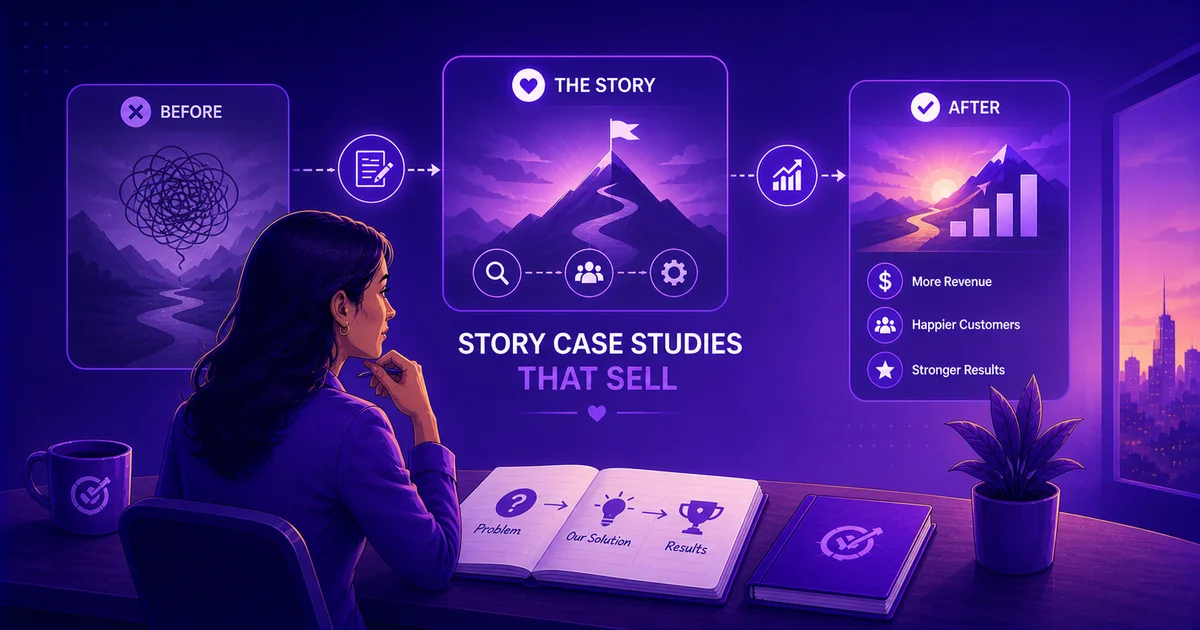
Your case studies shouldn't read like technical reports that put prospects to sleep. They should grip readers like the business thrillers they are. Every successful project has drama, conflict, and resolution built right in. The difference between a case study that drives leads and one that gets skipped comes down to how you tell the story.
The most effective case studies follow storytelling principles with a clear beginning, middle, and end structure, positioning the client as the hero while using their authentic voice through strategic quotes to build credibility and emotional connection with prospects.
Why Most Case Studies Fail to Connect
Traditional case studies follow a predictable formula: background, challenge, solution, results. While this covers the basics, it misses what makes people actually want to read on. Readers don't connect with dry recitations of facts. They connect with stories about real people facing real problems.
The fundamental shift happens when you stop thinking of case studies as service case study guides and start treating them as customer success stories. Instead of showcasing what you did, you're highlighting how your client transformed their business. This perspective change affects every word you write.
Consider how Gainsight approached their Demandforce case study. Rather than opening with company statistics, they started with a vivid scene: their VP of Customer Success facing an impossible CSM-to-customer ratio. This immediate human connection drew readers into the problem before introducing any solutions.
The Three-Act Structure for Case Studies
Act 1: The Setup and Inciting Incident
Your opening needs to establish the stakes immediately. Start by answering two critical questions: "Who was this project for?" and "What problem existed?" Give readers a reason to care about what comes next.
The best openings often feature what storytelling experts call a "story within a story." Instead of stating that your client needed better customer segmentation, paint a picture. Describe the moment when they realized their current approach wasn't working. Maybe it was a quarterly review where retention numbers fell short, or a customer meeting that revealed gaps in their strategy.
Paint the problem vividly. Don't just say "poor customer engagement." Show what that looked like: support tickets piling up, customers churning after the first month, or sales teams struggling to explain value propositions. These concrete details help prospects recognize their own situations in your client's story.
Introduce key characters. Every good story has protagonists readers can root for. In business case studies, these are usually the decision-makers, project leads, or end users who championed change. Give them names, titles, and enough personality for readers to connect with them as real people, not corporate entities.
The inciting incident should feel inevitable yet surprising. Something happened that made continuing with the status quo impossible. This creates the tension that pulls readers through the rest of your narrative.
Act 2: The Journey and Rising Action
This middle section chronicles the collaboration between your client and your team. But avoid the temptation to make yourself the hero. Your role is more like a trusted guide helping the client navigate their transformation.
Document the obstacles and setbacks honestly. Real projects hit snags. Maybe the first approach didn't work as expected, or unexpected complications emerged during implementation. These moments of uncertainty add authenticity to your story and help prospects understand that successful outcomes often require persistence and adaptation.
Show your problem-solving process. Use phrases that demonstrate critical thinking like "we discovered," "this led us to believe," or "our analysis revealed." This shows prospects how you approach challenges rather than just what you delivered.
One company working on customer segmentation might have discovered that their assumptions about customer behavior were wrong. Instead of hiding this insight, highlight how this discovery led to better outcomes. Show how your team adapted the strategy based on real data rather than sticking to the original plan.
Feature extensive client quotes. Customer quotes serve as the "secret sauce" that brings case studies to life. These aren't just testimonials sprinkled throughout your content. They're the voice of your story's hero describing their journey in their own words.
Look for quotes that reveal emotion and insight, not just satisfaction. The best quotes help readers understand what the experience felt like, not just what happened. A quote like "We finally felt like we understood our customers instead of guessing what they wanted" tells a more compelling story than "The results exceeded our expectations."
Act 3: Resolution and Transformation
Your conclusion should show the complete transformation, not just the numbers. Yes, include the metrics that matter. But also paint a picture of what success looks like in practice.
Instead of only stating that customer retention improved by 40%, describe what that means for the business. Maybe their customer success team can now focus on growth initiatives instead of constantly fighting churn. Perhaps the sales team uses the success story to close bigger deals. Show the ripple effects of your work.
One client saw high-value customers increase their purchase frequency to 3X after implementing better segmentation, with overall sales jumping 25%. But the real story was how this success changed their approach to customer relationships entirely. They shifted from reactive support to proactive engagement, fundamentally transforming their business model.
Look toward the future. Strong case studies end with forward momentum. What's your client planning next? How has this success opened new opportunities? This future focus helps prospects envision their own growth trajectory rather than just solving immediate problems.
Writing Techniques That Bring Stories to Life
Use Conversational Language
Write in first or second person rather than formal third-person narratives. Instead of "The client experienced significant improvements," write "You'll see how they transformed their entire approach to customer engagement." This direct address makes readers feel like part of the conversation.
Avoid jargon and industry buzzwords that create distance between you and your audience. If you must use technical terms, explain them in plain language. Your goal is understanding, not demonstrating expertise through complicated vocabulary.
Create Compelling Headlines and Subheaders
Your title should hook readers without revealing your company name upfront. Titles like "How Company X Increased Monthly Blog Traffic 500% in 18 Months" focus attention on the transformation rather than the service provider.
Subheaders should advance the narrative while providing useful navigation. Instead of generic labels like "Challenge" and "Solution," use descriptive phrases that hint at the story's development: "When Traditional Marketing Stopped Working" or "The Breakthrough That Changed Everything."
Mine Interview Transcripts for Story Gold
The best way to structure your narrative is to read through interview transcripts looking for the story's natural throughline. Clients often reveal the emotional arc of their journey without realizing it. They'll describe frustrations, breakthrough moments, and transformation in their own words.
Pay attention to language that reveals feelings, not just facts. When clients use phrases like "we were drowning in data" or "finally, everything clicked," you've found emotional touchpoints that will resonate with other prospects facing similar challenges.
Look for moments where clients describe their thinking process. These insights help readers understand not just what happened, but why decisions were made and how success became possible.
Common Storytelling Mistakes to Avoid
Making Yourself the Hero
Your company should play the role of mentor or guide, not protagonist. The client is the hero of this story. They're the ones who recognized the problem, made difficult decisions, and committed resources to change. Your role is helping them succeed, not saving the day single-handedly.
When describing your methodology or tools, focus on how they enabled client success rather than showcasing your capabilities. The distinction is subtle but crucial for maintaining the proper narrative perspective.
Skipping the Struggle
Perfect implementations make boring stories. Don't sanitize the journey by removing all obstacles and setbacks. Real prospects want to understand what they're signing up for, including potential challenges.
Showing how you and your client worked through difficulties builds confidence rather than concern. It demonstrates your problem-solving abilities and commitment to client success beyond the initial sale.
Overemphasizing Features Over Outcomes
Technical details about your service or methodology matter less than the results they produced. Prospects care more about transformation than implementation specifics. Lead with outcomes, then explain the approach that made them possible.
When you do include technical information, connect it directly to business impact. Instead of listing features, explain how each element contributed to the client's success story.
What the Data Says
- Gainsight CoPilot enabled over 200 customers to turn on a voice feature within a week - This specific outcome shows how storytelling can make technical achievements more relatable and impressive.
- High-value customers increased purchase frequency to 3X after segmentation, with overall sales growing 25% - Concrete metrics like these anchor story-driven case studies in measurable business results.
- Customer quotes serve as the "secret sauce" for authentic case studies - Direct client voices provide credibility that no amount of third-party description can match.
- Beginning-middle-end structure with clear conflict and resolution drives engagement - Following narrative principles makes business content more memorable and persuasive.
Common Questions About Case Study Writing
Q: How long should a story-driven case study be?
Story-driven case studies typically run 1,200-2,500 words, allowing space to develop characters, conflict, and resolution without losing reader attention. The length depends on complexity and available client insights.
Q: What if clients are reluctant to share detailed stories?
Start with specific questions about challenges, emotions, and breakthrough moments. Many clients open up when they realize you're genuinely interested in their perspective, not just looking for testimonial quotes.
Q: Should every case study follow the three-act structure?
While the three-act framework works well for most situations, adapt it based on your story's natural flow. Some projects have multiple turning points or parallel storylines that require different narrative approaches.
Q: How do you balance storytelling with technical credibility?
Include technical details that support the story without overwhelming it. Use appendixes or sidebars for in-depth methodology explanations while keeping the main narrative focused on human elements and business outcomes.
Q: Can you write compelling case studies for simple projects?
Even straightforward projects have human elements worth exploring. Focus on the decision-making process, implementation challenges, or unexpected insights rather than complex technical solutions.
Key Takeaways
- Position clients as heroes of their own transformation stories, with your company serving as the trusted guide who helps them overcome obstacles and achieve success.
- Use extensive client quotes throughout the narrative to provide authentic voice and emotional connection that prospects can relate to and trust.
- Structure case studies with clear beginning, middle, and end sections that include setup, rising action with obstacles, and resolution showing complete transformation.
- Write in conversational first or second person language rather than formal third-person narratives to create direct connection with readers.
- Mine interview transcripts for emotional touchpoints and breakthrough moments that reveal the human journey behind business outcomes, not just the technical implementation details.
How Your Brand Blueprint Can Help with This
The Brand Profile & Content Pillars section of your Brand Blueprint provides the foundation for compelling case study storytelling by defining your core value statement and content pillars that should drive every client success story. Additionally, the Sales Tools section delivers client engagement questions and persona insights that help you extract the most powerful story elements from client interviews.
Ready to put this into practice? BrandBlueprint.ai builds your complete brand messaging strategy -- including the sections that cover exactly what we talked about here.