
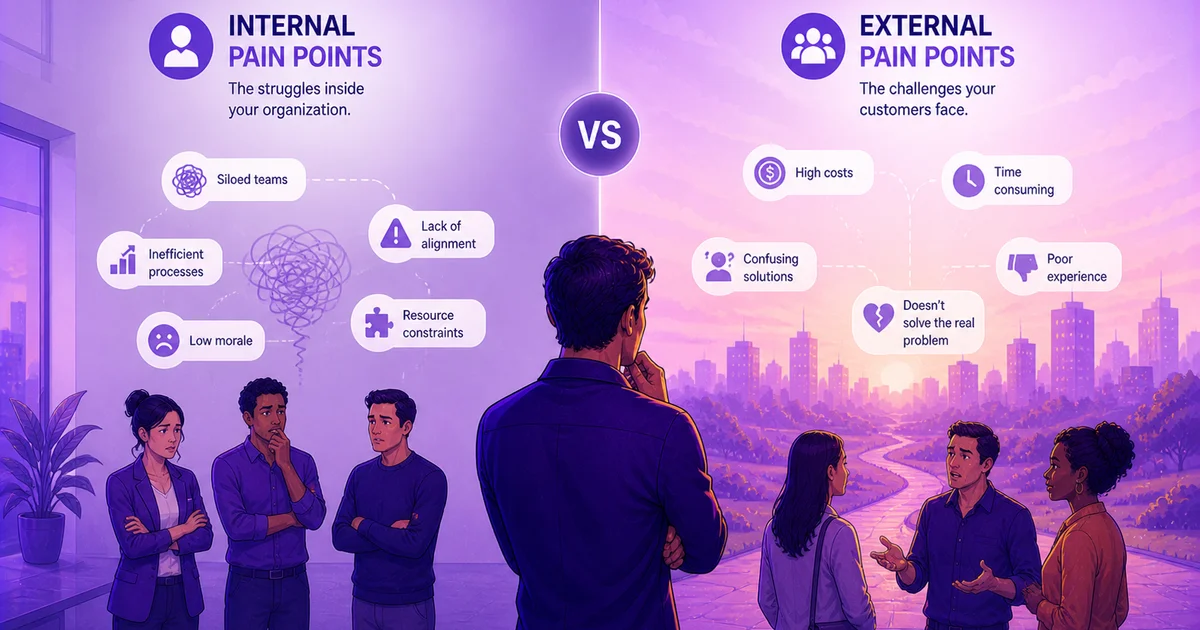
The biggest marketing mistake? Thinking customers buy because of features, price, or even convenience. The truth is far more complex. Your customers are driven by a psychological cocktail of internal frustrations and external pressures that create the perfect storm for a purchase decision. Understanding this psychology separates businesses that struggle to connect from those that build devoted customer bases.
Customer buying triggers fall into two categories: internal problems (personal frustrations, aspirations, and emotional needs) and external problems (social influences, environmental factors, and outside pressures). While external triggers like scarcity and social proof grab immediate attention, internal triggers like the desire for status or relief from daily frustrations create the deeper motivation that drives lasting customer relationships.
The Two-Layer Psychology of Every Purchase
Every buying decision happens on two levels simultaneously. Your customer faces an external problem they can articulate clearly. But underneath, they're wrestling with an internal problem they might not even recognize.
Take software purchases. The external problem seems obvious: "We need a CRM system to track our leads." But the internal problem runs deeper. The sales manager feels overwhelmed by scattered information. They worry about missing opportunities. They want to feel competent and in control.
This dual-layer reality explains why two companies with identical external problems often choose completely different solutions. The internal landscape varies dramatically from person to person, even when external circumstances look the same.
Understanding both layers transforms how you position your solution. Address only the external problem, and you compete on features and price. Address the internal problem, and you connect with motivation itself.
Internal Triggers: The Emotional Engine of Purchase Decisions
Internal triggers originate within your customer's mind and emotional state. These include daily frustrations, personal aspirations, self-perception needs, and the gap between where they are and where they want to be.
Frustration and Pain Relief
Daily frustrations create some of the strongest customer buying triggers. When someone struggles with data silos that make simple reports take hours, that frustration builds until it demands resolution. Weather affects mood and decision-making. A rainy week might make someone more likely to invest in home comfort solutions.
The key lies in recognizing these frustrations before they become urgent problems. Tap into ongoing pain points through your messaging, and you create connection at the emotional level where decisions actually happen.
Status and Identity Needs
People buy products that align with how they see themselves or how they want others to see them. Apple's iPhone launches demonstrate this perfectly. The external trigger might be a contract renewal, but the internal trigger is the desire to maintain status as someone who has the latest technology.
BMW leverages peer social proof as an external trigger, but it works because it activates internal status needs. Seeing friends' luxury car purchases creates envy, but that envy only converts to action when it connects with existing identity aspirations.
Personal Pursuits and Passion Projects
Personal pursuits consume mental energy and create natural buying windows. When someone commits to learning photography, they enter a months-long period of equipment research and purchases. Fitness goals trigger equipment, app, and supplement purchases.
These internal motivations matter because they create sustained buying interest rather than one-time impulses. Someone driven by personal growth will make multiple related purchases over time.
Understanding the internal trigger helps you position your solution as an enabler of their larger aspiration rather than just a tool for solving an immediate problem.
External Triggers: Environmental Pressures That Create Urgency
External triggers come from outside the customer's mind. These include social influences, cultural pressures, environmental changes, and deliberate marketing tactics designed to create action.
Prairie-Dog Events and Crisis Points
Prairie-Dog Events get their name from how prairie dogs pop up when they sense danger. In business, these are sudden disruptions that force people to seek new solutions. A server crash triggers backup software searches. Company growth beyond manual processes creates urgent software needs. A key employee leaving exposes gaps in systems or training.
These events convert abstract needs into immediate urgency. The smart approach focuses marketing efforts around these predictable crisis points rather than trying to create demand where none exists.
For complex products, help potential customers define their requirements during these crisis moments. This positions you as a trusted advisor rather than just another vendor.
Social Proof and Peer Pressure
Social media amplifies peer influence more than ever before. When colleagues share their success with new tools or services, it creates external pressure to investigate similar solutions. This works especially well in professional communities where reputation and competence matter.
Testimonials build trust and increase purchase readiness by providing social validation. But they work best when they address both external problems (what the solution does) and internal problems (how it made the customer feel).
Scarcity and Time Pressure
Time-limited offers and limited availability create external urgency even when no internal timeline exists. "Only five left in stock" or "Sale ends Friday" forces decision-making by adding external constraints.
These tactics work because they temporarily override analysis paralysis. But they backfire if overused or if the scarcity feels artificial.
Cultural and Social Forces That Shape Buying Behavior
Culture has the most profound external impact on purchase decisions because it shapes shared beliefs about what's normal, desirable, or necessary. Fitness brands like Peloton succeed by tapping into cultural values around health and self-improvement while positioning their products as essential tools for achieving these widely accepted goals.
Social class influences purchasing patterns through both aspiration and peer pressure. People buy products that signal membership in their desired social group or help them maintain their current status.
Family and friend recommendations carry special weight because they combine social proof with personal trust. These influences work on both levels simultaneously, providing external validation while addressing internal needs for acceptance and belonging.
The Motivation Factor: What Really Drives Action
Client purchase psychology centers around motivation, which bridges internal desires and external opportunities. Motivation turns passive interest into active searching and eventual purchase.
The Problem Recognition Process
Customers don't start looking for solutions until they recognize a problem exists. This recognition can come from internal awareness (gradual frustration reaching a tipping point) or external triggers (crisis events or social comparison).
Position your marketing to catch people at the moment of problem recognition rather than trying to convince them a problem exists. This timing approach yields far better results than broad awareness campaigns.
Solution Seeking Behavior
Once someone recognizes a problem, they seek the most appropriate solution based on their specific combination of internal and external factors. Two people with identical external problems might choose completely different solutions based on their internal priorities.
Understanding your customer's internal landscape helps you frame your solution in terms that resonate with their deeper motivations rather than just their surface-level requirements.
Timing Your Message for Maximum Impact
The buying cycle moves through awareness, consideration, and purchase phases, but customer buying triggers can accelerate or derail this process at any stage. Successful messaging adapts to where customers are in their journey while addressing both internal and external factors.
During awareness, customers need help connecting their vague discomfort to specific problems. Internal triggers dominate this stage. Your messaging should validate their frustrations and help them articulate what they're experiencing.
In consideration, external factors become more important. Customers compare solutions, seek social proof, and evaluate practical constraints like budget and implementation. Your messaging should provide both logical justification and emotional validation.
At purchase, urgency matters most. Both internal pressure (the cost of waiting) and external pressure (limited-time offers, competitive threats) can tip the decision.
What the Data Says
- Marketing stimuli directly provoke impulse buys according to research on external trigger cues, while internal factors like impulsivity traits amplify situational cues for purchasing decisions.
- Culture has the most profound external impact on buying decisions through shared beliefs and behaviors, as documented in customer influence research, making cultural alignment crucial for effective messaging.
- Prairie-Dog Events create immediate buying urgency when disruptions force customers to seek alternatives, according to buying trigger analysis, making crisis-point marketing highly effective.
- Internal triggers like frustration make communications connect emotionally with prospects, while external triggers such as scarcity drive immediate action, according to behavioral trigger research.
Frequently Asked Questions About Customer Buying Psychology
Q: How do internal and external triggers work together in customer decisions?
Internal triggers create the underlying motivation and emotional drive, while external triggers provide the timing and urgency. Both must align for a purchase to occur.
Q: Which type of trigger is more powerful for driving sales?
Internal triggers create deeper, longer-lasting customer relationships because they address emotional needs. External triggers work faster but may create one-time buyers rather than loyal customers.
Q: How can businesses identify their customers' internal triggers?
Listen to customer language about frustrations, aspirations, and desired outcomes. Survey existing customers about what really motivated their purchase beyond the obvious external factors.
Q: Do different industries rely more heavily on internal or external triggers?
Luxury and personal development industries often emphasize internal triggers like status and self-improvement. B2B software typically combines both, using external triggers like efficiency gains while addressing internal needs for competence and control.
Q: How should messaging change based on whether customers are driven by internal or external triggers?
For internal triggers, focus on emotional benefits, transformation, and identity alignment. For external triggers, emphasize urgency, social proof, and logical justification for action.
Key Takeaways
- Address both the external problem customers can articulate and the internal problem they feel but might not express to create deeper connection and motivation.
- Focus marketing efforts around predictable crisis points or Prairie-Dog Events when customers are forced to seek new solutions rather than trying to create demand where none exists.
- Use social proof and peer influences as external triggers, but ensure they connect with existing internal motivations like status, competence, or belonging for maximum effectiveness.
- Tailor your message timing to the buying cycle stage while addressing both internal frustrations during awareness and external validation needs during consideration.
- Recognize that customers with identical external problems often choose different solutions based on their unique internal landscape of motivations and self-perception needs.
How Your Brand Blueprint Can Help with This
Your Brand Blueprint includes dedicated sections for understanding both internal and external customer motivations. The 360 View section maps your ideal client's psychographics and pain points, while The Buyer's Journey identifies the specific questions and concerns that drive decisions at each stage. Together, these sections help you craft messaging that connects with both the practical problems customers face and the deeper motivations that drive their buying behavior.
Ready to put this into practice? BrandBlueprint.ai builds your complete brand messaging strategy -- including the sections that cover exactly what we talked about here.