
Walk into any company and listen to how different employees describe what the business does. The salesperson emphasizes features and pricing. The customer service rep focuses on problem-solving. The marketing manager talks about brand values and mission. Each person tells a different story about the same company, leaving prospects confused and deals stalled.
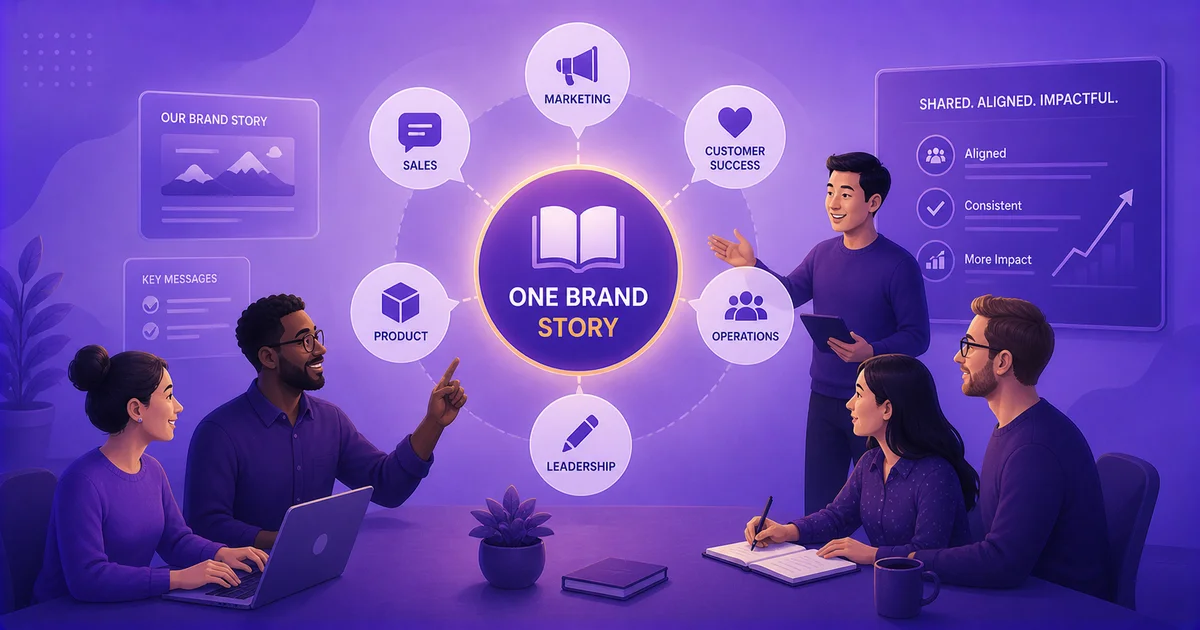
Brand messaging alignment happens when every team member tells the same compelling story about your business, using consistent language, value propositions, and positioning across all customer touchpoints. This creates a unified brand experience that builds trust, reduces confusion, and drives more conversions.
The Hidden Cost of Scattered Brand Stories
Most organizations suffer from what we call "brand story chaos" without even realizing it. Different departments develop their own ways of explaining products and services based on their daily interactions and priorities.
Your sales team might describe your software as "the most feature-rich platform in the market" while your marketing team positions it as "the simplest solution for busy professionals." Customer service explains it as "reliable support for your daily workflows." Each description is technically accurate, but they create three different brand stories.
This disconnect costs real money. Companies with strong sales-marketing alignment achieve 19% faster revenue growth and 15% higher profitability compared to misaligned organizations. The data reveals an even starker reality: 79% of marketing leads never convert due to misalignment, while aligned teams see 20% higher close rates.
When prospects hear different messages from different people, they lose confidence in your brand. They start questioning whether your company really understands its own value proposition. This uncertainty kills deals before they start.
Why Teams Tell Different Stories
Understanding the root causes helps you fix the problem permanently rather than applying temporary patches.
Lack of Documented Messaging
Most companies never write down their core brand story in a format that's useful for daily conversations. Mission statements and value propositions live in marketing decks, not in practical language that salespeople can use during phone calls or customer service reps can reference during support tickets.
Department-Specific Priorities
Marketing focuses on emotional connection and brand differentiation. Sales emphasizes competitive advantages and ROI. Customer service highlights reliability and problem-solving. Each team naturally gravitates toward messages that matter most in their daily work.
Inconsistent Onboarding
New hires learn about the company from whoever trains them, inheriting that person's version of the brand story. Without standardized messaging training, these individual interpretations multiply across the organization.
Research shows that 57% of sellers ignore marketing content if generic, creating their own materials and messages instead. This happens when marketing creates content without input from customer-facing teams about what actually resonates during real conversations.
No Single Source of Truth
Teams work from different presentations, websites, and documents that were created at different times for different purposes. These materials often contain outdated positioning or contradictory value statements, making consistent messaging impossible.
Building Your Brand Messaging Foundation
Creating company story alignment requires more than telling everyone to "stay on message." You need systems that make consistent communication easier than inconsistent communication.
Document Your Core Narrative
Start by capturing your essential brand story in simple, conversational language. This isn't your formal mission statement or marketing copy. Write how you'd explain your business to a friend at a coffee shop.
Include these elements:
- What you do (in plain English)
- Who you serve (specific audience description)
- What makes you different (unique value proposition)
- Why it matters (customer transformation)
Nike demonstrates this perfectly. Their core narrative centers on athletic empowerment and pushing limits. Whether you're reading their website, talking to a store associate, or watching their ads, you hear the same "Just Do It" philosophy expressed through athlete stories, product benefits, and brand experiences.
Create Conversation-Ready Messages
Transform your core narrative into specific phrases and talking points that work in real business situations. Your brand messaging alignment depends on giving teams language they can actually use.
Develop variations for different scenarios:
- 30-second elevator pitch
- Email introductions
- Phone call openers
- Proposal summaries
- Social media bios
Starbucks excels at this approach. Their "Third Place" concept (community space between home and work) appears consistently across all touchpoints, but the language adapts to context. Baristas talk about creating welcoming spaces, marketers emphasize community connection, and app notifications reference your "neighborhood Starbucks."
Address Common Objections
Every team encounters similar questions and concerns from customers. Document standard responses that maintain brand consistency while addressing specific objections. This prevents teams from creating their own answers that might conflict with your positioning.
Training Teams for Message Consistency
Having great messaging materials means nothing if teams don't know how to use them effectively. Training must go beyond sharing documents to building real communication skills.
Start with role-playing exercises where team members practice delivering core messages in different scenarios. Sales calls require different language than customer service interactions, but the underlying story should remain consistent.
Apple provides an excellent example. Their retail employees, technical support staff, and sales teams all emphasize innovation and simplicity, but they adapt the message for their audience. A Genius Bar technician talks about intuitive design when helping customers, while enterprise salespeople discuss streamlined workflows for business buyers.
Create scenario-based training that covers:
- Customer Discovery Conversations: How to uncover needs while weaving in brand messages naturally. Teams often think they must choose between listening and messaging, but skilled communicators do both simultaneously.
- Competitive Situations: Standard responses to competitor comparisons that reinforce your differentiation without directly attacking other brands. This prevents teams from making promises you can't keep or positioning claims you can't support.
- Technical Explanations: Ways to explain complex features or processes while maintaining brand voice and emphasizing customer benefits. Technical accuracy matters, but so does consistent positioning.
Regular practice sessions keep these skills sharp. Companies that conduct regular brand alignment sessions see better message consistency across all teams because communication becomes muscle memory rather than conscious effort.
Feedback and Refinement Loops
Create systems for teams to share what messages work well and what falls flat in real conversations. This feedback helps refine your messaging while maintaining consistency.
Customer-facing teams hear objections and questions that marketing might never encounter. Sales teams discover which value propositions resonate most with different buyer types. Customer service learns which explanations actually help people solve problems.
Schedule monthly sessions where teams share messaging insights and discuss refinements. This keeps your brand story alive and relevant while preventing the drift that creates inconsistent communication over time.
Making Consistency Stick
Short-term messaging alignment is easy. Long-term consistency requires systems that maintain alignment as your team grows and your business evolves.
Centralized Asset Management
Centralized digital asset systems ensure teams use approved materials rather than creating their own versions. Store presentations, email templates, proposal sections, and social media content in one location with clear usage guidelines.
Version control prevents teams from using outdated materials that contradict current positioning. When you update messaging, the new version automatically replaces old files rather than hoping everyone remembers to download the latest materials.
Cross-Department Collaboration
Include representatives from all customer-facing teams when developing or updating brand messages. Sales, marketing, customer service, and technical support each bring different perspectives on what resonates with customers.
Collaborative content informed by sales feedback increases adoption because teams feel ownership over messages they helped create. This prevents the common problem where marketing creates materials that sales teams ignore as impractical.
Regular Alignment Check-ins
Schedule quarterly reviews to assess messaging consistency across teams. Listen to sales calls, review customer service interactions, and audit marketing materials for message drift.
Look for signs that teams are creating their own messaging:
- New value propositions appearing in proposals
- Different competitive positioning in sales conversations
- Inconsistent feature descriptions across departments
- Varying explanations of company history or mission
Early detection prevents small inconsistencies from becoming major brand confusion.
Coca-Cola demonstrates systematic consistency through global brand guidelines that adapt to local markets while maintaining core messaging. Their "Taste the Feeling" campaign appears consistently across countries, languages, and cultures because they've created systems for local teams to implement global messaging effectively.
Onboarding Integration
Build brand messaging training into your standard onboarding process for all new hires, not just marketing and sales roles. Customer service, technical support, and even administrative staff interact with customers and should understand your brand story.
New employees learn consistent messaging from day one rather than picking up different versions from various team members. This prevents the gradual message drift that happens when people learn informally.
Create simple exercises where new hires practice explaining the company in their own words, then receive coaching to align their natural communication style with brand messaging. This builds confidence while ensuring consistency.
Measuring Your Success
Track specific metrics that indicate whether your brand messaging alignment efforts are working. Generic brand awareness surveys won't reveal whether teams are telling consistent stories.
Monitor these indicators:
- Sales Conversation Analysis: Review recorded sales calls for message consistency. Are your salespeople using approved value propositions and positioning statements? Do they explain features using brand-aligned language?
- Customer Feedback Patterns: Look for confusion in customer questions or support tickets that might indicate mixed messaging. If customers frequently ask for clarification about what you do or how you're different, you might have consistency problems.
- Content Performance: Track which messages perform best across different teams and channels. High-performing email templates, proposal sections, and sales scripts reveal which parts of your messaging resonate most with real customers.
- Team Confidence Surveys: Ask team members how confident they feel explaining the company's value proposition. Low confidence often indicates unclear or inconsistent messaging that makes people uncertain about what to say.
The goal isn't perfect uniformity but consistent core messaging expressed in ways that feel natural for each team member and appropriate for each customer interaction.
What the Data Says
79% of marketing leads never convert due to misalignment (Revenue Memo, 2026). This massive waste happens when sales and marketing tell different stories about the same company, confusing prospects and destroying trust.
Companies with strong sales-marketing alignment achieve 19% faster revenue growth and 15% higher profitability (Tribal Impact). Aligned teams convert more leads because they deliver consistent messages that build confidence rather than confusion.
57% of sellers ignore marketing content as generic (Sopro, 2026). When marketing creates materials without sales input, teams create their own messages that often contradict brand positioning.
32% of companies report consistent messaging increased brand revenue by over 20% (Exploding Topics). Message consistency directly impacts bottom-line results because customers trust brands that communicate clearly and consistently.
81% of consumers need to trust a brand before purchase (Visual Soldiers). Inconsistent messaging destroys trust by making companies appear confused about their own value proposition.
Brand Messaging Alignment FAQs
Q: How often should you review and update your brand messaging across teams?
Conduct quarterly alignment reviews to catch message drift early, with annual comprehensive updates to reflect business evolution and market changes.
Q: What's the biggest mistake companies make when trying to align team messaging?
Creating messaging materials without input from customer-facing teams, resulting in theoretical positioning that doesn't work in real conversations and gets ignored by salespeople.
Q: How do you maintain message consistency while allowing teams to personalize their communication?
Establish core message pillars that must appear in all communications, but allow teams to adapt language, examples, and emphasis based on their audience and context.
Q: Should every employee receive the same brand messaging training?
All customer-facing roles need comprehensive training, while internal employees need basic awareness. Tailor depth and focus based on how much each role communicates your brand externally.
Q: How do you measure whether your messaging alignment efforts are actually working?
Track sales conversation quality, customer confusion indicators, content adoption rates across teams, and team confidence in explaining company value propositions.
Key Takeaways
- Document your core brand story in conversational language that works for real business situations, not just formal marketing materials that teams can't use in daily conversations.
- Train all customer-facing teams on scenario-based messaging that adapts to different contexts while maintaining consistent core positioning and value propositions.
- Create systems for ongoing feedback and refinement based on what teams learn from actual customer interactions, preventing message drift over time.
- Use centralized asset management and regular alignment check-ins to ensure teams use current, approved messaging rather than creating their own contradictory versions.
- Measure success through specific indicators like sales conversation analysis and customer confusion patterns, not just generic brand awareness metrics.
How Your Brand Blueprint Can Help with This
Your Brand Blueprint includes dedicated sections for Brand Messaging and Messaging Systems that create the exact framework we discussed here. These sections provide your core narrative, conversation-ready talking points, and messaging variations for different scenarios, giving every team member a single source of truth for consistent communication.
Ready to put this into practice? BrandBlueprint.ai builds your complete brand messaging strategy -- including the section that covers exactly what we talked about here.