
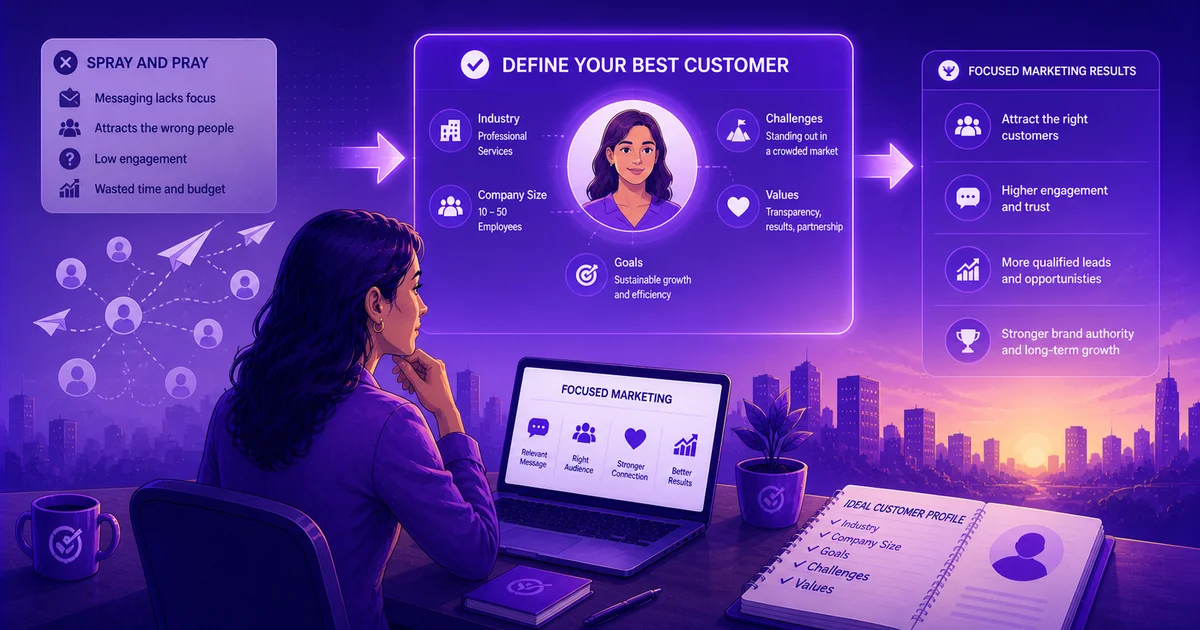
The phrase "we sell to everyone" might sound like a growth strategy, but it's actually a recipe for marketing confusion and wasted resources. When your messaging tries to appeal to everyone, it resonates with no one. The solution isn't to abandon broad market appeal – it's to develop a crystal-clear target customer profile that guides your marketing while still allowing room for diverse clients.
Defining your ideal customer means identifying the specific type of person or organization that gets the most value from what you offer, pays reliably, and becomes a long-term advocate for your business. This target customer profile becomes your North Star for messaging, product development, and growth strategy, even when you serve a diverse market.
Why "Everyone" Is No One
Most businesses resist narrowing their focus because they fear missing opportunities. You worry that defining an ideal customer means turning away potential revenue. But the opposite is true. Without a clear target customer profile, your marketing messages become generic, your positioning gets muddied, and prospects can't quickly understand why they should choose you.
Consider how Salesforce approaches this challenge. Despite serving everything from small startups to Fortune 500 enterprises, they create detailed ideal customer profiles using firmographics like company size and technographics to target specific segments. This allows them to craft precise messaging for enterprise sales teams while still maintaining flexibility to serve smaller clients.
The key insight here is that having an ideal doesn't mean you only serve that ideal. It means you design your core messaging and positioning around the customers who represent your highest value and best fit. Other customers can still find you and buy from you, but your primary marketing engine focuses on attracting more of your best customers.
The Anatomy of a Real Customer Avatar Guide
Building an effective target customer profile requires combining hard demographic data with deeper psychographic insights. Alice Heiman's approach illustrates this perfectly – she defines ideal customers as those who pay on time, respond promptly, provide testimonials, and genuinely value the service. These criteria go far beyond basic demographics to capture behavioral patterns and attitudes.
Your customer avatar guide should include both tangible traits and underlying motivations. Start with the basics: age ranges, income levels, geographic location, company size, or industry. But don't stop there. Dig into their values, challenges, decision-making processes, and communication preferences.
For example, SCORE highlights a bicycle retailer's persona: "Josh, a 28-year-old urban professional earning $90,000, who spends $5,000-$10,000 yearly on bikes and gear." This goes beyond demographics to capture specific spending behaviors and lifestyle choices that inform everything from product selection to marketing channels.
The magic happens when you can describe not just who your ideal customer is, but why they buy, what triggers their decision, and how they prefer to engage with businesses like yours.
Start With Your Winners
Analyze Your Top Performers
The best place to start defining your ideal customer isn't with market research or demographic studies – it's with your existing customer base. Look at your current clients and identify the ones who represent your biggest wins. These are customers with high lifetime value, smooth working relationships, and strong growth potential.
Use your CRM data to identify patterns among your best customers. Look for common traits in terms of deal size, sales cycle length, retention rates, and referral generation. Listen360 emphasizes segmenting by demographics, values, priorities, behaviors, and geography to isolate your ideal customers from the broader customer base.
Document What Makes Them Ideal
Once you've identified your top performers, dig deeper into what makes them successful partnerships. Do they share common pain points that your solution addresses particularly well? Do they have similar decision-making processes or buying triggers? Are there shared values or priorities that align with your business approach?
This analysis should reveal not just demographic patterns, but behavioral and attitudinal commonalities that you can use to identify similar prospects. The goal is to understand not just who these customers are, but why the partnership works so well.
Map Their Journey and Motivations
Understanding your ideal customers means understanding how they think about their challenges and evaluate solutions. What triggers them to start looking for a solution like yours? What questions do they ask during their research process? What factors ultimately drive their decision?
This journey mapping reveals the language your ideal customers use, the channels where they seek information, and the types of content that influence their decisions. All of this becomes crucial intelligence for attracting more customers who fit the same profile.
Navigate Geographic and Practical Constraints
Even when you feel like you "sell to everyone," practical limitations often provide natural boundaries for your ideal customer profile. Paragon Digital uses the example of a fresh fish delivery service that's restricted by transport requirements to keep products cold – geography becomes a primary filter for their ideal customer definition.
Physical and Service Limitations
Consider what practical constraints naturally limit your market. If you provide in-person services, geography matters. If you have industry-specific expertise, that knowledge becomes part of your ideal customer profile. If your solution works best for certain company sizes or business models, those become defining characteristics.
These constraints aren't limitations – they're focusing tools that help you identify where you can deliver exceptional value. A daycare naturally targets parents with preschool-aged children. A B2B software solution might work best for companies with specific technology infrastructure or team sizes.
Define What Problems You Solve Best
Your ideal customer profile should align closely with the specific problems your business solves most effectively. This means being honest about where you excel and where other solutions might be better fits. This clarity helps you attract customers who will be genuinely satisfied with your solution and become long-term advocates.
When you're clear about the challenges you resolve, you can identify prospects who have those exact challenges and are motivated to solve them. This creates natural qualification criteria that help you focus your marketing and sales efforts on the highest-probability opportunities.
Build Profiles That Drive Decisions
Create Behavioral Segments
Beyond basic demographics, effective target customer profiles capture behavioral patterns that predict buying decisions and long-term success. This might include how they research solutions, what factors drive their urgency, how they prefer to communicate, and what their decision-making process looks like.
For B2B businesses, this includes understanding organizational dynamics – who influences the decision, what approval processes exist, and what timeline expectations are realistic. For consumer businesses, it includes lifestyle factors, media consumption habits, and purchasing triggers.
Document Pain Points and Triggers
Your customer avatar guide should clearly articulate the specific pain points your ideal customers experience and what triggers them to seek a solution. This information directly informs your content strategy, sales conversations, and product positioning.
Understanding these triggers also helps you identify the right timing for your marketing efforts. If your ideal customers typically start looking for solutions during specific seasons, budget cycles, or business events, you can time your marketing accordingly.
Include Preference and Communication Styles
How does your ideal customer prefer to learn about new solutions? Do they want detailed technical specifications or high-level overviews? Do they prefer phone calls, emails, or in-person meetings? Do they make quick decisions or require extended evaluation periods?
These preferences should inform every aspect of your customer experience, from your website design to your sales process. When you align your approach with your ideal customer's preferences, you create a smoother path to purchase and better long-term relationships.
Test and Refine Your Profile
Creating your initial target customer profile is just the beginning. The most effective profiles evolve based on real market feedback and business results. Track how well your defined ideal customer profile predicts actual customer success and satisfaction.
Monitor key metrics like conversion rates, customer lifetime value, and retention rates for customers who match your ideal profile versus those who don't. This data helps you refine your profile over time and ensures it remains an accurate guide for your marketing and sales efforts.
Regular customer feedback also provides insights into whether your ideal customer profile accurately reflects their motivations, challenges, and preferences. Use surveys, interviews, and ongoing relationship management to keep your understanding current and accurate.
As your business evolves, your ideal customer profile may need to evolve too. New products, expanded capabilities, or market changes might shift who represents your best customer fit. Regular review and refinement ensure your target customer profile remains a useful strategic tool.
What the Data Says
Salesforce research shows companies with detailed ideal customer profiles see higher conversion rates and customer lifetime value by focusing their marketing and sales efforts on prospects who match their best customer patterns.
Alice Heiman's methodology demonstrates that ideal customers love doing business with you and actively help improve the relationship through feedback, referrals, and collaborative problem-solving approaches.
SCORE's research indicates successful customer personas include specific behavioral and spending patterns, like their example of Josh spending $5,000-$10,000 yearly on specialized equipment within his hobby area.
Listen360's analysis reveals businesses that segment customers by shared traits, behaviors, and geography can more effectively replicate their most successful partnerships across their broader market.
Target Customer Profile FAQs
Q: How specific should my ideal customer profile be?
Your profile should be specific enough to guide marketing decisions but broad enough to capture meaningful market segments. Include 3-5 defining demographic characteristics and 3-5 key behavioral or psychographic traits that predict success.
Q: Can I have multiple ideal customer profiles?
Yes, many businesses serve 2-3 distinct customer segments effectively. Create separate profiles for each major segment, but resist the urge to create too many profiles as this can dilute your marketing focus and message clarity.
Q: What if my best customers don't fit a clear pattern?
Look deeper at shared values, motivations, or problem types rather than just demographics. Sometimes the common thread is attitude, urgency level, or decision-making style rather than traditional demographic categories.
Q: How often should I update my customer avatar guide?
Review your target customer profile quarterly and update it annually, or whenever you launch new products, enter new markets, or notice significant shifts in your most successful customer patterns.
Q: Should I share my ideal customer profile publicly?
Your ideal customer profile is primarily an internal strategic tool, but elements of it should inform your public messaging, website copy, and marketing materials to attract the right prospects naturally.
Key Takeaways
- Start with your existing best customers and identify common demographic and behavioral patterns that predict successful long-term relationships and high lifetime value.
- Build customer avatar guides that combine hard demographics with psychographic insights about values, motivations, decision-making processes, and communication preferences.
- Use practical constraints like geography, industry expertise, or service limitations as natural focusing tools rather than viewing them as business restrictions.
- Create behavioral segments that capture how your ideal customers research, evaluate, and purchase solutions, including their preferred communication styles and decision timelines.
- Regularly test and refine your target customer profile based on actual conversion rates, customer success metrics, and ongoing market feedback to ensure it remains strategically useful.
How Your Brand Blueprint Can Help with This
Your Brand Blueprint's 360 View section creates exactly this kind of detailed ideal customer profile, combining demographics, psychographics, pain points, and behavioral insights into a complete client avatar. The Buyer's Journey section then maps how these ideal customers move through their decision process, giving you the behavioral insights that make your customer profile actionable for marketing and sales.
Ready to put this into practice? BrandBlueprint.ai builds your complete brand messaging strategy – including the section that covers exactly what we talked about here.