
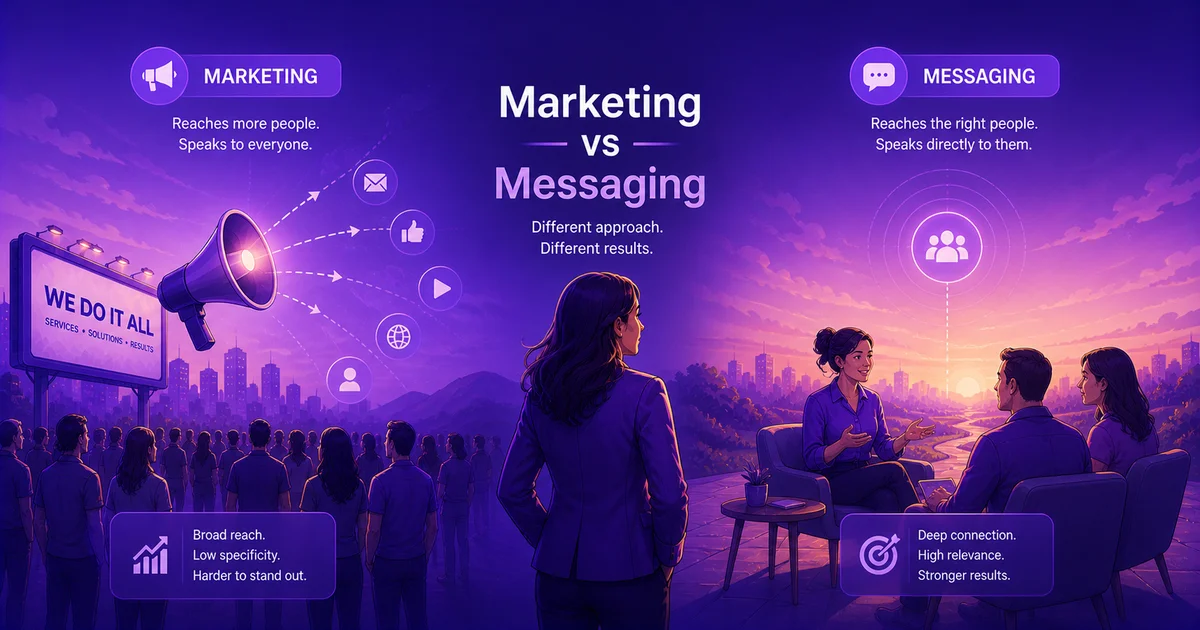
Your customers are bombarded with thousands of messages every day. The brands that break through the noise aren't just the ones with bigger marketing budgets or flashier campaigns. They're the ones that understand a crucial distinction: the difference between what they say and how they say it. Most businesses confuse marketing tactics with core messaging strategy, leading to scattered communications that fail to build lasting brand recognition or drive meaningful results.
Marketing and messaging serve different but complementary roles in your business growth. Messaging is your foundational strategy that defines what you communicate about your brand, while marketing is the tactical execution that delivers those messages to your audience through specific channels and campaigns.
Understanding Brand Messaging: Your Foundation
Brand messaging isn't just a tagline or a clever slogan. It's the comprehensive system that defines how your brand communicates its value to the world. Effective messaging must be clear, consistent, and audience-specific, addressing the exact pain points your customers face while positioning your brand as the solution they need.
Think of Apple's approach to brand messaging. Their core message centers on innovation and simplicity, captured in phrases like "Think Different." This messaging foundation remains constant whether they're launching a new iPhone, promoting their environmental initiatives, or announcing software updates. The messaging doesn't change with each campaign because it represents the brand's fundamental identity and value proposition.
Your brand messaging should accomplish several key things. First, it must clearly articulate what makes your business different from competitors. Second, it needs to speak directly to your ideal customers' needs and challenges. Finally, it should be memorable and repeatable, giving your team and your customers language they can use to describe your brand.
Marketing messaging empathizes with customers' needs, positioning the brand as a supportive "Robin" to customers' "Batman". This customer-centric approach means your messaging puts the customer at the center of the story, with your brand playing the helpful guide role rather than trying to be the hero.
The most effective brand messaging creates what messaging strategists call a "message hierarchy." At the top sits your core brand promise - the single most important thing you want people to know about your business. Below that are supporting messages that reinforce different aspects of your value proposition. At the bottom are proof points - specific examples, testimonials, and data that validate your claims.
What Marketing Actually Does
Marketing takes your messaging and amplifies it through strategic channels and campaigns. While messaging answers "what should we say," marketing answers "where, when, and how should we say it." Marketing messaging builds early awareness and relationships with prospects at the top of the funnel, casting a wider net to attract potential customers who may not even know they have a problem you can solve.
Consider how HubSpot approaches marketing execution. Their core messaging revolves around inbound marketing education and helping businesses grow better. But their marketing campaigns vary dramatically based on the audience and objective. They might run a LinkedIn campaign targeting marketing directors with messaging about lead generation, while simultaneously running a blog content campaign for small business owners focused on getting started with digital marketing.
Top-of-funnel marketing efforts focus on building awareness and establishing credibility. This includes content marketing, social media campaigns, SEO-optimized blog posts, and thought leadership initiatives. The messaging at this stage is broader and more educational, designed to attract people who are just beginning to recognize they have a challenge.
Middle-funnel marketing becomes more targeted and solution-focused. Email nurture sequences, case study campaigns, and product demonstrations all fall into this category. The messaging shifts from awareness-building to trust-building, showing prospects exactly how you solve problems like theirs.
Bottom-funnel marketing drives decision and action. This includes sales enablement materials, demo requests, free trial campaigns, and conversion-optimized landing pages. The messaging becomes highly specific and results-oriented, addressing final objections and making the path to purchase as clear as possible.
Marketing also involves choosing the right channels for your message. A professional services firm might focus on LinkedIn and industry publications, while a consumer product company might prioritize Instagram and influencer partnerships. The messaging principles remain consistent, but the delivery adapts to where your audience spends their time.
The Critical Distinction: Strategy vs. Tactics
Many businesses struggle because they jump straight to marketing tactics without establishing clear messaging first. They launch social media campaigns, run Google ads, or send email newsletters without a unified message strategy. The result is scattered communications that confuse rather than convince.
Messaging serves as the overall strategy defining "what" to say, based on positioning, stories, and customer research. This strategic foundation informs every marketing decision you make, from which channels to prioritize to what content themes to develop.
Without solid messaging, your marketing becomes reactive rather than strategic. You might find yourself chasing the latest marketing trends or copying what competitors are doing, rather than building a distinctive brand voice that sets you apart. You might also struggle with consistency, saying different things to different audiences or changing your message every time you launch a new campaign.
Strong messaging creates guardrails for your marketing efforts. It gives you clear criteria for evaluating whether a particular tactic or campaign aligns with your brand. It also provides language and concepts that your entire team can use consistently, from sales conversations to customer service interactions to social media posts.
The most successful brands use their core messaging as a filter for all marketing decisions. Nike's "Just Do It" messaging informs everything from their athlete endorsement choices to their retail store design to their customer service approach. The marketing tactics vary widely across different sports, demographics, and product lines, but the empowerment message remains constant.
Why You Need Both Working Together
Messaging without marketing is just strategy on a shelf. You can have the most compelling brand message in the world, but if nobody hears it, it won't drive business results. Marketing amplifies your messaging and gets it in front of the right people at the right time through the right channels.
But marketing without messaging is just noise. You might generate some short-term results through clever campaigns or promotional tactics, but you won't build the kind of lasting brand recognition that drives sustainable growth. Customers will struggle to understand what you stand for or why they should choose you over alternatives.
The most effective approach integrates both elements from the start. Your messaging strategy should inform your marketing calendar, ensuring that every campaign reinforces your core brand messages while addressing specific business objectives. Your marketing results should feed back into your messaging strategy, providing data about which messages resonate most strongly with different audience segments.
Brand messaging appeals to multiple segments within the target audience while marketing messaging varies for specific needs like campaigns or launches. This means you can maintain message consistency while still tailoring your communications for different contexts and objectives.
A well-executed integration might look like this: Your core messaging establishes that your consulting firm helps mid-market companies streamline operations for faster growth. Your Q1 marketing campaign focuses on manufacturing companies struggling with supply chain issues. Your Q2 campaign targets service businesses dealing with remote work challenges. The underlying message about operational efficiency remains constant, but the marketing execution addresses specific seasonal concerns and industry pain points.
This approach also extends to sales alignment. Marketing messaging prioritizes long-term prospect engagement and credibility over immediate personalization, while sales messaging builds on that foundation with individualized conversations. Your sales team should use the same core value propositions and proof points that your marketing establishes, but adapt the delivery for specific prospect situations.
Common Pitfalls to Avoid
One of the biggest mistakes businesses make is treating messaging and marketing as separate functions that rarely interact. The marketing team launches campaigns without input from the messaging strategy, while the messaging exists only in brand guidelines that nobody actually uses for day-to-day marketing decisions.
Another common pitfall is changing your core messaging too frequently. Some businesses treat messaging like a marketing campaign, updating it every quarter or whenever they launch something new. This creates confusion among prospects and customers who never get a chance to understand and remember what your brand represents.
The opposite extreme is equally problematic: never evolving your messaging based on market feedback. Your core brand promise might remain stable over time, but the way you articulate that promise should adapt as you learn more about what resonates with your audience and how your market context changes.
Many businesses also underestimate the time and effort required to develop truly effective messaging. They rush through the strategy phase to get to marketing execution, resulting in generic messages that could apply to any competitor. Effective messaging requires deep customer research, competitive analysis, and careful testing to identify the specific language and concepts that will differentiate your brand.
Building Your Integrated Approach
Start with messaging strategy before you launch any major marketing initiatives. This means understanding your customers' actual language, identifying the specific outcomes they care about, and developing unique angles that set you apart from alternatives. The time invested in messaging strategy will make every subsequent marketing effort more effective.
Document your messaging in a way that your entire team can use. This isn't just a brand guidelines document that sits in a shared folder. It should include specific language for different situations, examples of how to adapt core messages for different channels, and clear guidelines about what to emphasize and what to avoid.
Create feedback loops between your messaging and marketing efforts. Track which message variations generate the strongest response across different channels and audience segments. Use this data to refine your messaging strategy while maintaining consistency in your core brand promise.
Consider the customer journey when planning how messaging and marketing work together. The awareness stage requires broader messaging that attracts people who don't yet know they need your solution. The consideration stage needs more specific messaging about how you solve particular problems. The decision stage requires detailed messaging that addresses final concerns and objections.
Test your messaging before committing to major marketing campaigns. Use surveys, interviews, and small-scale tests to validate that your target audience understands and responds to your key messages. This testing should happen at the messaging level, not just the campaign level, so you're building marketing programs on a solid foundation.
What the Data Says
Marketing messaging aims for actions like website visits or social engagement to boost awareness - This shows why top-funnel marketing requires different messaging than bottom-funnel conversion efforts.
Dozens or hundreds of marketing message variations can stem from one brand strategy - Demonstrates how core messaging provides the foundation for extensive marketing execution without losing consistency.
It powers marketing for lead generation and offers - Shows the direct connection between messaging strategy and marketing performance outcomes.
Sales messaging develops individualized relationships in decision/action funnel stages - Illustrates how messaging strategy must work across both marketing and sales functions for maximum effectiveness.
Common Questions About Marketing and Messaging Strategy
Q: How often should you update your core brand messaging?
Core messaging should remain stable for 2-3 years minimum, while tactical marketing messages can change with each campaign. Only update core messaging when your target market, value proposition, or competitive landscape changes significantly.
Q: Can the same person handle both messaging strategy and marketing execution?
While one person can manage both, they require different skill sets. Messaging demands strategic thinking and customer research abilities, while marketing requires tactical execution and channel expertise. Many businesses benefit from dedicated resources for each.
Q: What happens if your marketing team creates campaigns without input from your messaging strategy?
You risk inconsistent brand communication that confuses customers and weakens your market position. Marketing campaigns should always align with and reinforce your core messaging framework.
Q: How do you measure the effectiveness of brand messaging versus marketing campaigns?
Marketing campaigns have direct metrics like click-through rates and conversions. Messaging effectiveness shows up in longer-term metrics like brand recognition, message recall, and consistency across all customer touchpoints.
Q: Should messaging be the same across all marketing channels?
Core messages should remain consistent while adapting the format and emphasis for each channel's audience and context. LinkedIn messaging might emphasize ROI while Instagram focuses on visual outcomes, but both should support the same brand promise.
Key Takeaways
- Messaging is your strategic foundation that defines what you communicate, while marketing is the tactical execution that delivers those messages through specific channels and campaigns.
- Without clear messaging, marketing becomes scattered and ineffective. Without marketing, even the best messaging strategy won't reach your target audience or drive business results.
- Core brand messaging should remain stable over time while marketing campaigns can vary based on objectives, seasons, and audience segments.
- The most successful brands create feedback loops between messaging and marketing, using campaign performance data to refine their message strategy while maintaining consistency.
- Integration requires documented messaging that your entire team can use consistently across all marketing efforts, sales conversations, and customer interactions.
How Your Brand Blueprint Can Help with This
The Brand Blueprint addresses exactly this challenge by creating your core messaging foundation in the Brand Messaging and Brand Profile sections, then showing you how to execute it through the Sales Tools and Content Strategy components. You get both the strategic "what to say" and the tactical "how to say it" in one comprehensive system.
Ready to put this into practice? BrandBlueprint.ai builds your complete brand messaging strategy -- including the section that covers exactly what we talked about here.