
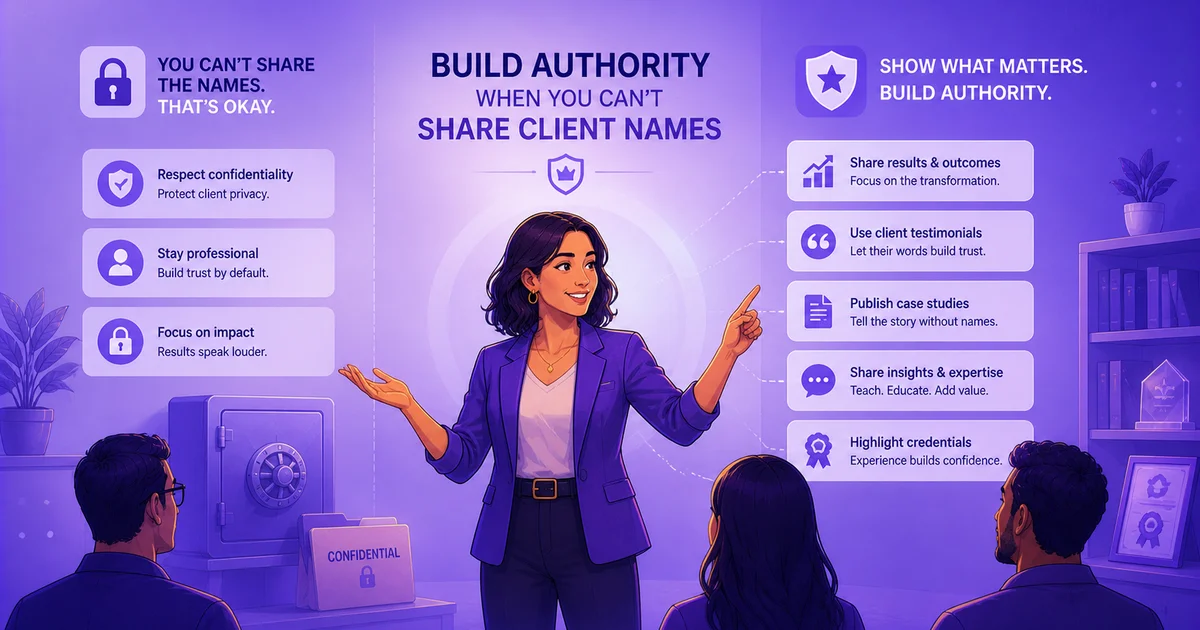
Building trust and credibility becomes a unique challenge when your most impressive results must stay confidential. Non-disclosure agreements, client privacy policies, and industry regulations often prevent you from sharing the case studies that would most effectively demonstrate your expertise. This limitation forces you to find alternative pathways to build business authority without relying on traditional testimonials or named success stories.
Building authority without client names requires shifting from showcasing outcomes to demonstrating expertise through original frameworks, data-driven insights, and thought leadership content. Focus on creating value through proprietary research, industry analysis, and educational resources that position you as a trusted source of knowledge rather than relying on client testimonials.
Why Traditional Authority Building Falls Short
Most businesses follow a predictable playbook for establishing credibility: collect glowing testimonials, publish detailed case studies, and showcase big-name clients as social proof. This approach works well when you can freely discuss your work, but it becomes impossible when confidentiality agreements block your access to these traditional trust signals.
The challenge runs deeper than simply finding alternative marketing materials. When prospects can't see concrete evidence of your results, they struggle to evaluate your capabilities. They might question whether your services actually deliver value or wonder if your expertise matches your claims. Without named examples, your authority claims can sound hollow or self-serving.
This creates what researchers call the "credibility gap" - the space between what you know you can deliver and what potential clients believe you can achieve. Harvard Business Review research shows that 70% of buyers start their journey with generic searches, turning to thought leaders for guidance rather than vendor claims.
The solution isn't to abandon authority building altogether. Instead, it requires developing new methods that demonstrate expertise through knowledge sharing rather than outcome reporting.
The Data-Driven Authority Framework
Research and Industry Intelligence
Creating original research positions you as a knowledge generator rather than just a service provider. When you can't share individual client stories, aggregate industry data becomes your primary credibility tool. This approach allows you to demonstrate deep market understanding without violating any confidentiality agreements.
Start by collecting anonymized data from your client work. Look for patterns, benchmarks, and trends that emerge across multiple projects. Transform this information into industry reports, benchmark studies, or trend analyses that provide value to your target market.
Ahrefs built significant authority in the SEO space by publishing anonymized data studies about search behavior, ranking factors, and content performance. They never revealed which specific websites generated their data, but their comprehensive industry reports became go-to resources for marketers worldwide. This approach established them as thought leaders who understand the broader market, not just individual client needs.
Proprietary Methodologies and Frameworks
Developing your own systematic approach to solving common problems creates teachable content that demonstrates expertise. Forbes research indicates that agencies using proprietary frameworks see higher conversion rates than those relying solely on case studies.
Your methodology becomes your signature - a unique way of approaching challenges that sets you apart from competitors. Document each step of your process, explain the reasoning behind your approach, and share the framework publicly through blog posts, webinars, or downloadable guides.
Consider how Basecamp built authority not through client case studies but by sharing their product development philosophy through the "Rework" book and transparent blogging. They created frameworks around remote work, product simplicity, and company culture that became industry standards without ever mentioning specific client implementations.
Future-Focused Content Creation
While you can't discuss past client results, you can share predictions and insights about where your industry is heading. LinkedIn data reveals that brands without case studies see 2x engagement from original insights compared to backward-looking content.
Future-facing content positions you as a strategic thinker who understands market dynamics beyond individual client situations. Write about emerging trends, predict industry changes, and analyze how current events might affect your market. This type of content attracts decision-makers who value forward-thinking partners over those who only report past successes.
When creating predictive content, ground your insights in observable data rather than pure speculation. Reference industry reports, regulatory changes, technological developments, or economic indicators that support your predictions. This approach demonstrates analytical thinking while maintaining credibility.
Content Strategies That Build Trust
Educational Resource Development
Transform your expertise into educational content that helps your audience solve problems independently. This counterintuitive approach - giving away knowledge for free - actually builds stronger authority than holding information back. When people successfully apply your advice, they associate you with their positive outcomes.
HubSpot exemplified this strategy by creating comprehensive inbound marketing guides, free tools like Website Grader, and educational certifications long before they had major client logos to showcase. They built authority by teaching their methodology openly, which created a community of practitioners who became advocates for their approach.
Create ultimate guides that compile public information with your expert analysis. HubSpot's research shows that content creators sharing curated insights see 3x more shares than self-promotional content. These comprehensive resources position you as someone who understands the full landscape of your industry.
Anonymous Case Study Alternatives
While you can't name clients, you can still share problem-solving approaches through anonymized scenarios. Present challenges as "Company X" or "A manufacturing client" and focus on your methodology rather than specific outcomes. This approach lets you demonstrate expertise while respecting confidentiality requirements.
Structure these anonymous examples around the decision-making process rather than the final results. Explain how you diagnosed the problem, what alternatives you considered, and why you chose your specific approach. This level of detail shows prospects how you think and work without revealing protected information.
Intercom built significant authority by sharing anonymized playbooks and operator manuals based on their client work. They focused on the strategic thinking and process behind their recommendations rather than specific company results, which created valuable resources for their target market while maintaining client confidentiality.
Community Building and Networking
Direct engagement with your industry builds relationships that translate into authority over time. Academic research indicates that anonymous submissions receive 20% more positive reviews in top journals, suggesting that ideas evaluated on merit alone often carry more weight than those tied to specific credentials.
Participate meaningfully in industry discussions through thoughtful commentary on other experts' content, hosting webinars that address common challenges, and facilitating conversations between industry professionals. This positions you as a connector and facilitator rather than just a service provider.
Launch a newsletter or podcast that curates industry insights and adds your expert analysis. This regular touchpoint with your audience builds familiarity and positions you as someone who stays current with market developments. Focus on synthesizing information from multiple sources rather than promoting your own services directly.
Measurement and Optimization
Tracking Authority Without Attribution
Traditional authority metrics like case study downloads or testimonial mentions don't apply when client names remain confidential. Instead, focus on engagement metrics that indicate growing influence: newsletter subscribers, webinar attendance, content shares, and speaking invitations.
Monitor how often your frameworks or methodologies get referenced by others in your industry. Set up Google Alerts for your proprietary terms and track when other professionals mention your approaches in their content. This type of organic citation indicates genuine thought leadership rather than paid promotion.
Long-Term Relationship Building
Authority built through expertise rather than client logos tends to develop more slowly but creates stronger foundations. People who follow your content over time develop trust based on consistent value delivery rather than impressive name-dropping.
Focus on building relationships with industry peers who can become referral sources or collaboration partners. These professional relationships often prove more valuable than individual client testimonials because they represent ongoing validation of your expertise by people who understand your field deeply.
Track the quality of opportunities that come through your content marketing efforts. Authority-based lead generation often produces better-qualified prospects who already understand your approach and value your expertise before they contact you.
What the Data Says
- 92% of B2B buyers engage with thought leadership for purchase decisions (Demand Gen Report 2023): Thought leadership content directly influences buying decisions even without client testimonials.
- 86% of B2B decision-makers consume thought leadership content weekly (LinkedIn 2022): Regular consumption of expert insights creates ongoing influence opportunities.
- 65% of agencies report NDAs block 40% of case study potential (Forbes 2021): Confidentiality restrictions affect nearly half of all potential case studies, making alternative authority building essential.
- Thought leaders without case studies convert 25% higher via webinars (LinkedIn 2022): Educational content often outperforms traditional promotional materials for conversion rates.
- Content creators sharing curated insights see 3x more shares than self-promotion (HubSpot): Valuable content spreads more effectively than promotional messaging.
Building Authority Without Client Names: Common Questions
Q: How long does it take to build authority through content instead of case studies?
Authority through thought leadership typically takes 6-12 months of consistent content creation and engagement. Unlike testimonial-based credibility that can establish quickly, expertise-based authority requires demonstrating knowledge over time through multiple touchpoints and valuable contributions to industry conversations.
Q: Can I mention client industries or company sizes without violating confidentiality?
Generally yes, if your agreements allow industry-level information. You can often share "Fortune 500 manufacturing company" or "regional healthcare provider" without violating specific client confidentiality. Always review your NDAs carefully and err on the side of caution.
Q: What content formats work best for building authority without client names?
Educational webinars, industry trend analysis, and proprietary frameworks tend to perform best. These formats let you demonstrate expertise through teaching and insights rather than relying on social proof from client logos or testimonials.
Q: How do I handle prospects who specifically ask for client references?
Prepare a standard response explaining your confidentiality policies and offer alternative forms of credibility like industry certifications, published research, or speaking credentials. Many prospects respect strict confidentiality as a sign of professionalism rather than a limitation.
Q: Should I create fake client stories or composite examples?
Never create fictional examples that imply real client work. Instead, use clearly labeled hypothetical scenarios, publicly available case studies from other companies, or anonymized examples that combine elements from multiple situations without claiming specific outcomes.
Key Takeaways
- Transform client confidentiality from a limitation into a competitive advantage by developing proprietary research and frameworks that demonstrate deep industry expertise
- Focus on future-facing content and trend analysis rather than backward-looking case studies to position yourself as a strategic thinker who understands market dynamics
- Build authority through consistent value creation via educational content, industry analysis, and community engagement rather than relying on client testimonials
- Measure success through engagement metrics, thought leadership indicators, and relationship quality rather than traditional case study performance
- Use anonymized examples and hypothetical scenarios to illustrate your problem-solving approach without violating confidentiality agreements
How Your Brand Blueprint Can Help with This
Your Brand Blueprint's Credibility, Proof & Transformation section specifically addresses how to build trust without traditional case studies by identifying alternative credibility sources and transformation stories that don't rely on client names. The Brand Messaging and Content Pillars sections help you develop the thought leadership frameworks and educational content strategies that establish expertise-based authority. Ready to put this into practice? BrandBlueprint.ai builds your complete brand messaging strategy -- including the section that covers exactly what we talked about here.