
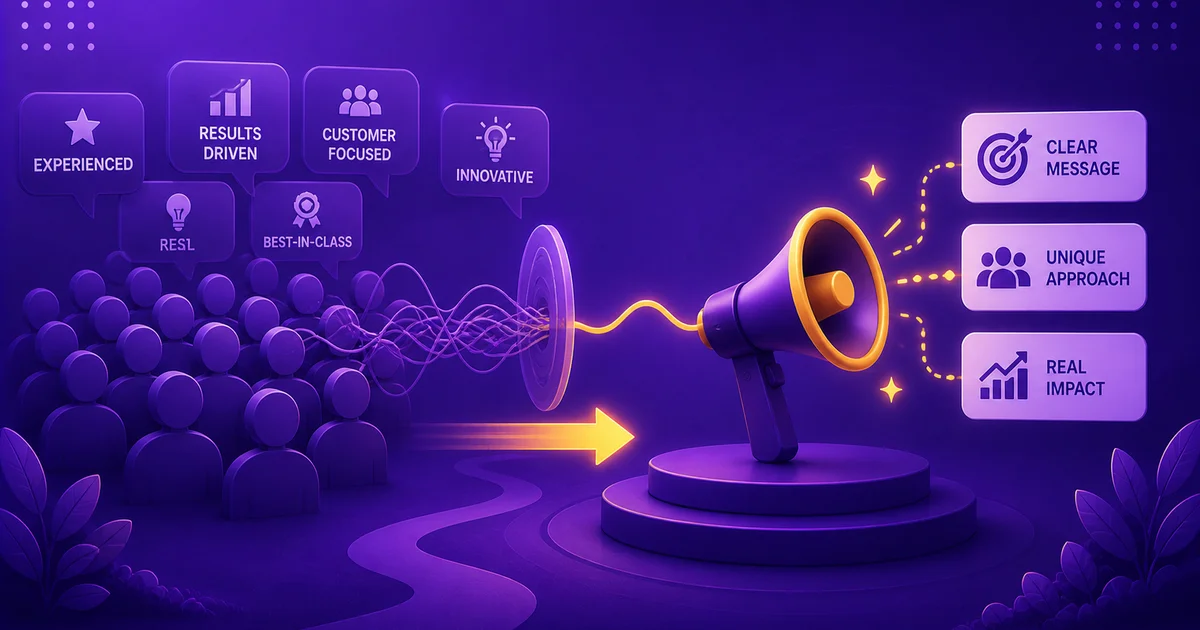
Every company claims they're "innovative," "customer-centric," and offer "comprehensive solutions." They promise to "leverage synergistic approaches" and "optimize your potential for scalable growth." This corporate speak doesn't just make your marketing boring—it makes your brand invisible. When everyone sounds the same, no one stands out, and customers can't tell the difference between you and the dozen other companies saying exactly the same thing.
The solution to generic messaging isn't complicated: stop copying what everyone else does and start speaking like the unique business you actually are. This means ditching buzzwords, embracing your real personality, and having the courage to say something different—even if it means some people won't like it.
Why Every Company Sounds the Same
Most businesses fall into the same messaging trap without realizing it. They study their competitors' websites, mimic their language, and adopt the same safe, corporate tone. The result? Generic brand messaging attracts generic customers, while a distinctive brand voice attracts your customers.
This mimicry happens for understandable reasons. When you're launching a business or entering a new market, looking at successful competitors feels like smart research. You see them using terms like "cutting-edge solutions" and "seamless integration," so you assume that's how professional companies are supposed to talk.
But here's what really happens: your messaging becomes a bland mixture of everyone else's words. Customers reading your website could easily mistake it for any of your competitors. When your communication feels disconnected, people notice—even if they can't quite put their finger on why. They might not understand what you actually do. They might not quite trust you.
The irony is that trying to sound professional often makes you sound less trustworthy. Generic corporate language creates distance between you and your customers instead of building connection.
The Hidden Cost of Buzzword Bingo
Corporate buzzwords don't just make your content boring—they actively hurt your ability to communicate value. Consider this common example: "We leverage synergistic solutions to optimize your potential for scalable growth." What does that actually mean? Nothing specific. It could apply to a software company, a consulting firm, or a landscaping business.
The fix is simple: translate that corporate speak into human language. "We help your business grow" says the same thing in four words instead of eleven, and everyone understands it immediately.
The Worst Offenders
These buzzwords show up everywhere and say nothing:
- Synergy: Usually means "working together," but sounds like empty corporate speak
- Solutions: Every business solves problems—this word adds no information
- Cutting-edge: Claims innovation without proving it
- Customer-centric: Every business should focus on customers—this isn't a differentiator
- Comprehensive: Vague and meaningless without specifics
- Leverage: Business jargon for "use"
- Optimize: Often used when "improve" would be clearer
The problem isn't that these words are inherently bad. The problem is they've been overused to the point where they communicate nothing distinctive about your business.
What Stand Out Messaging Actually Looks Like
Companies that break through the noise don't just avoid buzzwords—they actively choose to sound different. They embrace personality, take clear positions, and aren't afraid to polarize their audience.
- Mailchimp revolutionized email marketing messaging by embracing quirky humor instead of corporate formality. While competitors talked about "robust email solutions," Mailchimp simply said "Send better email" and paired it with playful visuals and conversational copy.
- Dollar Shave Club disrupted an entire industry with their irreverent "Our blades are f*ing great" approach. They rejected the sophisticated, technology-focused messaging that dominated razor marketing and instead embraced casual, no-nonsense humor.
- Wendy's turned social media engagement into a competitive advantage through their sassy, irreverent Twitter presence. They roast competitors and engage directly with customers in ways that would horrify most corporate communications teams—and it works brilliantly.
These brands succeed because they're willing to sound like themselves, even when it means some people won't connect with their personality. Generic brand messaging attracts generic customers. A distinctive brand voice attracts your customers.
Finding Your Authentic Voice
Developing a unique brand voice isn't about being weird for the sake of being different. It's about expressing your genuine business personality consistently across all communications.
Start with one core belief that drives how your company operates. Maybe you believe that good design should be accessible to everyone. Maybe you think most consultants overcomplicate simple problems. Maybe you're convinced that customer service should feel like talking to a friend, not a call center.
Pick one belief that drives how your company works. Say it clearly. Say it like you mean it. This becomes the foundation for everything else you communicate.
Your authentic voice often starts with leadership. The only way companies can develop a truly unique tone of voice is when they talk in a genuinely unique tone of voice. This voice often originates with the boss, the founder, the face of the company.
Define Your Brand as a Person
Think about your brand as if it were a person you're describing to a friend. Are they witty and irreverent? Calm and authoritative? This isn't about creating a fake personality—it's about identifying the personality that already exists in how you do business.
Consider these traits that help break away from corporate sameness:
- Open: You share information freely and don't hide behind corporate walls
- Approachable: Customers feel comfortable asking questions and raising concerns
- Honest: You acknowledge limitations and don't overpromise
- Trustworthy: You follow through consistently and admit when you make mistakes
- Transparent: Your processes and pricing are clear and understandable
- Caring: You genuinely want customers to succeed, not just buy from you
- Authoritative: You demonstrate expertise through knowledge, not jargon
The key is choosing 2-3 traits that genuinely reflect how you operate and leaning into them consistently.
The Specificity Solution
One of the fastest ways to stand out is to be more specific about what you actually do. Instead of saying "We provide comprehensive solutions," try "We only work with three types of problems, and we solve them better than anyone."
This specificity does two important things: it makes your value immediately clear, and it demonstrates confidence in your expertise. When you're willing to say what you don't do, people trust you more about what you do do.
Basecamp exemplifies this approach. Instead of positioning themselves as a "comprehensive project management solution," they consistently communicate calm, opinionated perspectives about work culture. They publish content like "It doesn't have to be crazy at work," directly contrasting the hustle culture that dominates much of the SaaS industry.
Their messaging isn't trying to appeal to everyone—and that's exactly why it works so well with their target audience.
Replace Vague Claims with Concrete Examples
Don't say you're "results-driven." Show a specific result you achieved. Don't claim you provide "exceptional service." Describe what your service actually includes that others don't offer.
Before: "Our team of experienced professionals delivers innovative solutions that exceed client expectations."
After: "We've helped 47 restaurants increase their profit margins by an average of 23% in their first six months working with us."
The second version gives readers concrete information they can evaluate. It demonstrates expertise through facts rather than adjectives.
Getting Past the Fear of Being Different
The biggest obstacle to developing stand out messaging isn't skill—it's fear. Fear that being different will alienate potential customers. Fear that having personality will seem unprofessional. Fear that taking a position will limit your market.
This fear keeps most companies trapped in generic messaging. But your brand voice isn't just about being different; it's about being you.
Why Polarization Is Good for Business
When you take a clear position or express genuine personality, some people won't connect with your message. This isn't a bug—it's a feature. The people who don't like your approach probably weren't going to be great customers anyway.
Meanwhile, the people who do connect with your authentic voice will be much more engaged. They'll stay longer, buy more, and refer others who share similar values.
Professionals have opinions, too. Voice your perspectives, hot takes, and opinions (ideally with diplomacy and generosity). Don't fear the haters. You might be surprised at how many 'get' and embrace you.
Start Small and Build Confidence
If completely overhauling your brand voice feels overwhelming, start with small changes. Pick one piece of content—maybe your email newsletter or social media posts—and experiment with more personality there.
Try writing like you're explaining your business to a friend. Use more "you" and "we" language. Share a behind-the-scenes story. Take a gentle position on an industry trend.
Pay attention to how your audience responds. You'll likely find that more personality leads to more engagement, not less.
Consistency: The Secret Weapon
Having a unique voice is only half the battle. The other half is using it consistently across every touchpoint. You don't have to be perfect. You just need to be recognizable.
Inconsistency is where many companies lose their way. They invest in developing a brand voice, but then different team members write content with different personalities. Marketing sounds casual and friendly, while sales emails are formal and corporate. The website copy is playful, but customer service responses are robotic.
This inconsistency confuses customers and undermines trust. If you don't sound like the same company across different interactions, people wonder who they're really dealing with.
Building Systems for Consistency
Create simple guidelines that anyone on your team can follow:
- Tone keywords: Pick 3-4 words that describe your brand personality
- Language rules: What words do you use and avoid?
- Example phrases: How do you typically express common concepts?
- Voice samples: Keep examples of content that nails your brand voice
The goal isn't to make everything sound identical, but to ensure everything sounds like it comes from the same personality.
What the Data Says
- According to brand voice development research: Generic brand messaging attracts generic customers, while a distinctive brand voice attracts your specific customers - This highlights why differentiation matters for customer acquisition
- Brand consistency studies show: When communication feels disconnected, people notice and may not understand what you do or trust you - Demonstrating the trust impact of inconsistent messaging
- Content effectiveness research indicates: Professional businesses can voice opinions diplomatically to stand out and connect with audiences - Showing that personality in business communication is effective
- Brand voice development analysis reveals: Authentic voice often originates with company leadership and founders rather than marketing teams - Highlighting where genuine brand personality typically comes from
Common Questions About Brand Voice Development
Q: How do I know if my messaging is too similar to competitors?
Do a simple test: remove your company name from your website copy and show it to someone unfamiliar with your business. If they can't tell what makes you different from others in your industry, your messaging is too generic. Look for unique perspectives, specific approaches, or personality traits that only you express.
Q: What if being more distinctive alienates potential customers?
The customers you alienate with authentic messaging probably weren't going to be great long-term clients anyway. People who connect with your genuine voice will be more engaged, loyal, and likely to refer others. It's better to strongly appeal to 100 ideal customers than weakly appeal to 1,000 marginal ones.
Q: How long does it take to develop a unique brand voice?
Developing your core voice can happen in weeks, but implementing it consistently across all touchpoints takes months. Start with one area—like your email newsletter or social media—and gradually expand. Most businesses see engagement improvements within the first month of using more authentic messaging.
Q: Should different team members write in exactly the same voice?
No, but they should write with the same personality. Think of it like a family—each person has their own style, but you can tell they're related. Create guidelines for tone and language, but allow individual team members to express your brand personality in their own way.
Key Takeaways
- Generic corporate language makes you invisible in a crowded market—specificity and personality help customers remember and choose you over identical-sounding competitors
- Buzzwords like "synergy," "solutions," and "cutting-edge" communicate nothing distinctive about your business and should be replaced with clear, specific language about what you actually do
- Your authentic brand voice should start with one core belief that drives your business, expressed consistently across all communications rather than trying to appeal to everyone
- Being distinctive will polarize some people, but the customers who connect with your authentic voice will be more engaged, loyal, and valuable than those attracted to generic messaging
- Consistency across all touchpoints—from website copy to customer service emails—builds trust and recognition more effectively than perfect but inconsistent messaging
How Your Brand Blueprint Can Help with This
Your Brand Blueprint addresses exactly this challenge in multiple sections. The Brand Messaging section develops your core message framework and identifies the big ideas your business can own in your market. The Brand Profile & Content Pillars section creates your unique value statement and gives you consistent content pillars that drive authentic messaging across all channels.
Ready to put this into practice? BrandBlueprint.ai builds your complete brand messaging strategy—including the sections that cover exactly what we talked about here.