
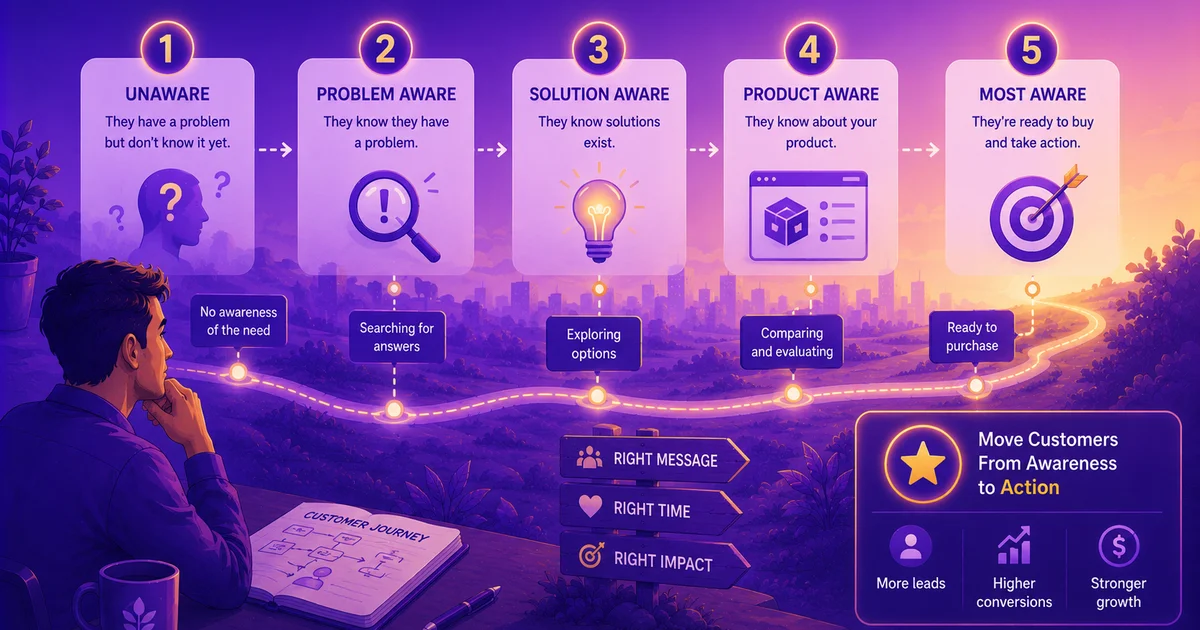
Your potential customers don't wake up knowing they need your product or service. They move through distinct stages of awareness, each with different questions, concerns, and information needs. When your content speaks directly to where they are in this journey, you guide them naturally from first discovery to final purchase. Most businesses create content randomly, missing the strategic opportunity to meet prospects exactly where they are.
Planning content for each stage of your customer's journey means creating educational materials for awareness, comparison tools for consideration, and proof-driven resources for decision-making. This approach increases conversion rates by delivering the right information at precisely the moment prospects need it most.
Understanding the Customer Journey Framework
The customer journey isn't a straight line. It's a progression through distinct psychological states, each requiring different types of content and messaging approaches.
At the awareness stage, prospects recognize they have a problem but don't yet know what solutions exist. They're researching symptoms, exploring possibilities, and trying to understand their situation better. Content here should educate without selling.
During consideration, prospects have identified potential solutions and are comparing options. They want to understand benefits, see proof points, and evaluate different approaches. Your content needs to showcase value while building trust.
The decision stage finds prospects ready to choose a specific provider. They need final reassurance, detailed information, and clear next steps. Content here should remove friction and provide compelling reasons to move forward.
HubSpot has mastered this progression with their inbound methodology, creating awareness content like educational blog posts and ebooks, consideration content through webinars and case studies, and decision content via product demos and free trials. This systematic approach has driven millions in qualified leads.
Awareness Stage: Building Trust Through Education
Focus on Problems, Not Solutions
Awareness content succeeds when it addresses the questions your prospects are asking before they know you exist. These questions center on understanding their challenges, not evaluating vendors.
Industry research and insights work exceptionally well here. Share data about trends affecting your prospects' industry. Discuss common challenges without immediately positioning your solution. Create content that makes readers think, "Finally, someone understands what I'm dealing with."
Educational blog posts should answer fundamental questions your audience has. If you're a financial advisor, write about retirement planning mistakes people make in their 40s. If you're a marketing consultant, explain why certain campaigns fail. Focus on being genuinely helpful.
Diagnostic tools and assessments let prospects self-discover problems. A business coach might create a "Leadership Effectiveness Assessment." A web designer could offer a "Website Performance Audit." These tools provide value while introducing your expertise.
The key is patience. Awareness content builds your reputation as a trusted source of information. Prospects remember who helped them understand their situation, even if they're not ready to buy yet.
Content Formats That Build Awareness
Different formats serve different learning styles and consumption preferences at the awareness stage.
Video content excels at explaining complex concepts. Create short explainer videos addressing common questions in your field. Keep them focused on education, not promotion.
Infographics and data visualizations make complex information digestible. They're highly shareable and position you as someone who understands industry trends and challenges.
Podcasts and interviews build authority while providing valuable insights. Interview other experts, discuss industry trends, or answer listener questions. The conversational format feels less salesy while building genuine connections.
Research reports and whitepapers work particularly well for B2B audiences. Original research positions you as a thought leader while providing substantial value to prospects researching their challenges.
Remember that awareness content often gets discovered through search engines and social media. Optimize for the questions your prospects are actually asking, not the solutions you want to sell.
Consideration Stage: Demonstrating Value and Building Preference
The consideration stage requires a delicate balance. Prospects know their problem and are evaluating solutions. They want to understand what's possible while beginning to form preferences about approaches and providers.
Showcasing Results Without Overselling
Case studies with concrete outcomes become powerful tools during consideration. Companies using journey-aligned content see 5.4x higher conversion rates from lead to opportunity, which demonstrates the importance of getting this stage right.
Structure case studies to mirror your prospects' decision process. Start with a challenge they recognize, explain your approach in terms they understand, and show measurable results. Include enough detail that prospects can envision similar outcomes for their situation.
Comparison guides and buying frameworks help prospects evaluate options systematically. Create content that educates them about what to look for in a solution, what questions to ask potential providers, and how to evaluate different approaches. Position yourself as the helpful guide, not just another option.
Behind-the-scenes content builds trust by showing your process and expertise. Share how you approach common challenges, what your methodology looks like, or how you customize solutions for different situations.
Building Authority Through Strategic Content
Webinars and live demonstrations let prospects experience your expertise directly. Choose topics that showcase your thinking while addressing consideration-stage concerns. Allow time for questions where prospects can engage directly with your team.
Detailed guides and playbooks provide substantial value while demonstrating depth of knowledge. A marketing agency might create "The Complete Guide to B2B Lead Generation." A financial planner could develop "The Pre-Retirement Planning Workbook." These resources require time investment from prospects, naturally qualifying their interest level.
Email courses and nurture sequences stay connected with prospects over time. Break down complex topics into digestible lessons delivered over several days or weeks. This approach builds familiarity while providing ongoing value.
The goal during consideration is becoming the obvious choice when prospects are ready to move forward. This happens through consistent value delivery and demonstrating deep understanding of their specific challenges.
Decision Stage: Removing Friction and Compelling Action
Decision-stage prospects have done their research. They're comparing specific options and need final information to move forward. Your content must address lingering concerns while making the buying process as smooth as possible.
Proof Points That Drive Decisions
Customer testimonials and reviews provide social proof from people similar to your prospects. Include specific details about results achieved and problems solved. Video testimonials feel more authentic than written ones.
Detailed pricing and service information removes common decision barriers. Be as transparent as possible about costs, timelines, and what's included. Hidden information creates friction that can derail decisions.
Risk reversal offers like guarantees, free trials, or money-back promises reduce perceived risk. Salesforce uses this approach effectively with free trials that let prospects experience their platform before committing.
Making the Next Step Obvious
Clear calls-to-action guide prospects toward the next logical step. Whether that's scheduling a consultation, requesting a proposal, or starting a free trial, make the process obvious and friction-free.
FAQ pages addressing common concerns handle objections before they become deal-breakers. Address concerns about implementation, results, costs, and timing. Be thorough and honest in your responses.
Proposal templates and service agreements demonstrate professionalism while setting clear expectations. Some prospects want to understand exactly what working together looks like before making contact.
Implementation guides and onboarding overviews show prospects what happens after they say yes. This reduces anxiety about the unknown and positions you as organized and professional.
Decision-stage content should feel consultative rather than aggressive. You're providing final information to help prospects make the best choice for their situation.
Creating Your Content Marketing Plan
Mapping Questions to Journey Stages
Start by listing the questions your prospects ask at each stage. This becomes the foundation of your SEO content strategy.
Awareness questions often start with "What is..." or "Why do..." or "How does..." They're educational and exploratory. Consideration questions involve comparisons: "What's the difference between..." or "Which approach works best for..." Decision questions focus on specifics: "How much does it cost..." or "What's included in..."
Create a simple spreadsheet mapping these questions to journey stages and content formats. Keap recommends this practical approach for small businesses beginning to align content with customer needs.
Distribution and Promotion Strategy
Different content types perform better on different platforms. Blog posts and long-form content work well for search engine optimization. Social media excels at sharing insights and engaging in conversations. Email nurtures relationships over time.
Consider where your prospects spend time during each journey stage. Early-stage prospects might discover you through search engines or social media. Later-stage prospects might engage more through email or direct website visits.
Measuring Journey-Aligned Content Performance
Track how content performs at moving prospects through each stage. Awareness content should generate traffic and social shares. Consideration content should drive email signups and deeper engagement. Decision content should convert to consultations or sales.
Monitor which pieces of content consistently move prospects forward and which ones create drop-offs. This data helps you refine your content marketing plan over time.
Look for patterns in how prospects consume content across stages. Some may move quickly from awareness to decision. Others might engage with consideration content for months before converting. Understanding these patterns helps you create more effective nurture sequences.
Common Content Planning Mistakes to Avoid
Creating Content in Isolation
Many businesses create content without understanding where prospects are in their journey. They write blog posts about whatever seems interesting or create promotional materials focused entirely on their services.
Effective content planning starts with customer awareness stages, not internal priorities. Every piece of content should have a clear purpose in moving prospects forward.
Skipping the Awareness Stage
Some businesses focus entirely on consideration and decision-stage content. They assume prospects already know they need help and are ready to evaluate options.
This approach misses opportunities to build relationships early in the journey. 60% of B2B buyers are more likely to purchase after consuming educational content in the awareness stage, making awareness content a crucial part of the overall strategy.
Over-Promoting Too Early
Pushing promotional content to awareness-stage prospects creates resistance. These prospects aren't ready to evaluate vendors yet. They're still understanding their challenges and exploring possibilities.
Save promotional messages for prospects who have demonstrated interest through deeper engagement. Let awareness content build trust first.
Inconsistent Messaging Across Stages
Content at different journey stages should feel connected while serving different purposes. Your awareness content should introduce concepts that your consideration content expands on.
When messaging feels disconnected across stages, prospects lose confidence in your expertise. They wonder if you understand their situation or if you're just creating content randomly.
What the Data Says
91% of B2B marketers use content marketing, but only 45% have a documented strategy tying content to buyer journey stages (2023). This gap explains why much content marketing fails to drive results.
Companies with journey-aligned content see 5.4x higher conversion rates from lead to opportunity. Strategic content planning directly impacts business outcomes.
60% of B2B buyers are more likely to purchase after consuming educational content in the awareness stage. Early-stage content investment pays off in higher conversion rates.
70% of B2B marketers are prioritizing content marketing in 2023. The competition for attention makes strategic planning more important than ever.
Content Journey Planning FAQ
Q: How do I know which stage a prospect is in?
Track their behavior and engagement patterns. Awareness prospects typically consume educational content and ask general questions. Consideration prospects download comparison guides and attend webinars. Decision prospects request pricing information and schedule consultations.
Q: Should I create content for all three stages simultaneously?
Start with awareness content to build your audience, then add consideration and decision content as you understand your prospects better. Creating all stages at once often results in unfocused content that doesn't serve any stage well.
Q: How long should prospects spend in each stage?
Journey length varies dramatically by industry, purchase complexity, and buyer type. Some prospects move from awareness to decision in days, while others take months or years. Focus on providing value at each stage rather than rushing the process.
Q: What if prospects skip stages or move backward?
Customer journeys aren't linear. Prospects might discover you during consideration or return to awareness after a decision-stage interaction. Create content that works regardless of entry point and makes it easy for prospects to find relevant information.
Q: How do I measure content performance across journey stages?
Use different metrics for each stage. Awareness content should drive traffic and engagement. Consideration content should generate qualified leads and deeper engagement. Decision content should convert to sales conversations and customers.
Key Takeaways
- Map your content to specific customer journey stages rather than creating content randomly - this strategic approach increases conversion rates by delivering the right information when prospects need it most.
- Focus awareness content on education and problem identification without promoting your solution - building trust early creates stronger relationships and higher lifetime customer value.
- Use consideration-stage content to demonstrate expertise and showcase results through case studies, comparison guides, and detailed resources that help prospects evaluate options.
- Remove friction during the decision stage with clear pricing, testimonials, and risk-reversal offers that address final concerns and make next steps obvious.
- Track different metrics for each stage - awareness content should drive traffic and shares, consideration content should generate qualified leads, and decision content should convert to sales.
How Your Brand Blueprint Can Help with This
Your Brand Blueprint's Buyer's Journey section maps exactly how your prospects move from awareness to purchase, including the specific questions they ask at each stage and targeted messaging that addresses their needs. The Content Pillars section then provides the strategic foundation for creating journey-aligned content that consistently moves prospects forward. Ready to put this into practice? BrandBlueprint.ai builds your complete brand messaging strategy -- including the sections that cover exactly what we talked about here.