
The Hidden Signs Your Brand Voice Is Connecting With Customers
Small business owners pour months into crafting the perfect brand voice, but many never discover whether their efforts actually move the needle. The hard truth is that 68% of companies see 10-20% revenue growth when they nail brand voice effectiveness, yet most entrepreneurs remain blind to whether their messaging resonates with real customers. Without clear measurement, you might be speaking into the void while competitors steal your market share.
Brand voice effectiveness reveals itself through measurable engagement spikes, conversion rate improvements, and customer feedback patterns. The most reliable indicators include 23% higher engagement rates on social media, increased email open rates, and organic customer testimonials that echo your exact messaging tone. Companies with consistent brand voices typically see revenue increases of 23-33% within 12-18 months.
Measuring What Actually Matters
The difference between gut feelings and genuine brand voice success lies in tracking the right metrics at the right intervals.
Customer Engagement Signals That Prove Voice Resonance
Nike's empowering tone consistently drives action across every platform because they track engagement patterns that reveal authentic customer connection. Your brand voice works when customers naturally respond with measurable behaviors.
- Social Media Interaction Depth: Look beyond likes to comments, shares, and saves. Social media posts with consistent voice get 23% more engagement because audiences connect emotionally with recognizable personality. Track comment sentiment and whether followers use your brand's language in their responses.
- Email Response Behaviors: Monitor open rates, click-through rates, and reply frequency across different message tones. Mailchimp's playful voice consistently outperforms formal alternatives in their own testing, leading to higher conversion rates through relatable communication.
- Content Consumption Patterns: Analyze which blog posts, videos, or social content generate the most engagement and time spent. If your confident, expert voice works, readers will consume longer content and return for more insights.
- Organic Brand Mentions: Track how customers describe your brand on social media, review sites, and forums. When your voice effectiveness peaks, customers naturally adopt your language and tone when recommending you to others.
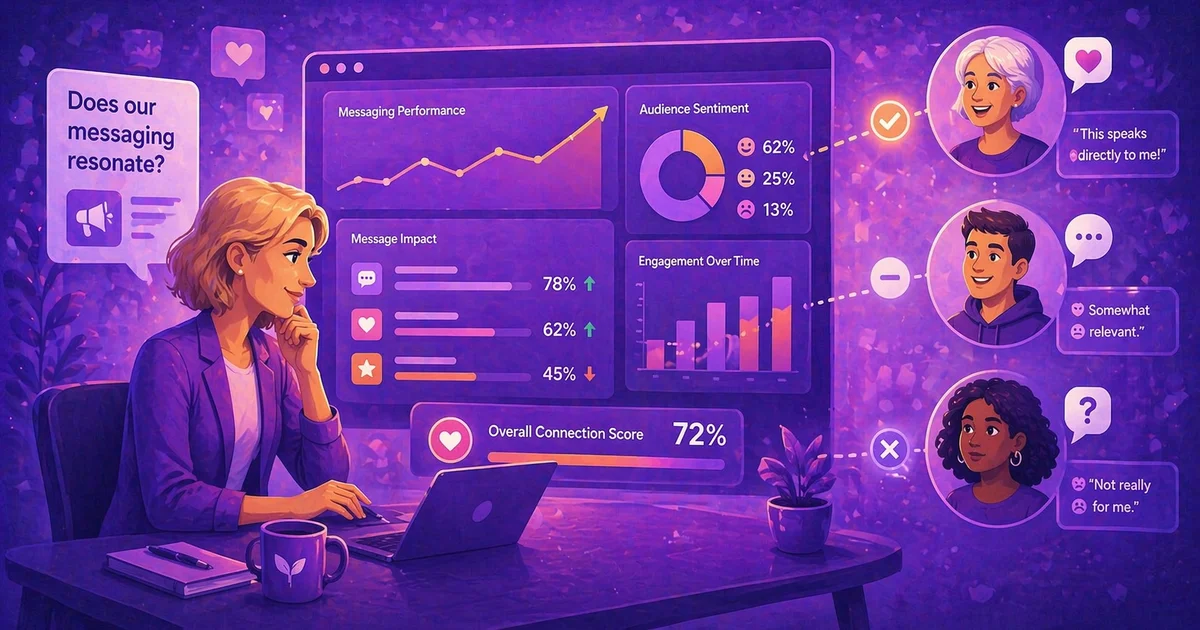
Here's what this means for your measurement strategy: Set up monthly dashboards tracking engagement depth rather than vanity metrics. If your brand voice truly resonates, you'll see consistent patterns of deeper interaction across all channels within 60-90 days.
Financial Performance Indicators
Beyond engagement lies the ultimate test of brand voice effectiveness: measurable business impact. Apple's sleek, confident messaging drives premium pricing because their voice builds trust that customers willingly pay for.
- Conversion Rate Improvements: A/B test different voice approaches in sales copy, landing pages, and email campaigns. Effective brand voices typically show 15-35% higher conversion rates because they reduce customer hesitation through authentic communication.
- Customer Lifetime Value Growth: Beauty brands see 306% higher customer lifetime value with consistent messaging because voice creates emotional bonds that extend beyond single transactions. Track repeat purchase rates and average order values over 6-month periods.
- Premium Pricing Acceptance: Monitor pricing elasticity and customer complaints about cost. 87% of consumers pay more for trusted brands built through voice consistency, allowing higher margins without customer loss.
- Sales Cycle Acceleration: Measure time from first contact to purchase across different communication approaches. Consistent brand voices reduce sales friction by building immediate recognition and trust.
Revenue Attribution Methods
Track revenue sources tied to specific voice applications. If your email campaigns with personality X consistently outperform formal alternatives, attribute that revenue difference to voice effectiveness. Most businesses see measurable ROI within 12-18 months of voice consistency implementation.
The data reveals clear patterns: companies maintaining voice consistency across all touchpoints report revenue increases averaging 23-33% compared to inconsistent competitors.
Customer Feedback and Behavioral Analysis
Smart businesses dig deeper than surface metrics to understand how brand voice shapes customer relationships. When 81% of consumers need to trust a brand before purchasing, voice becomes the trust-building mechanism that drives purchasing decisions.
- Direct Customer Feedback: Survey customers about brand personality perception using specific adjectives. Ask whether your communication feels authentic, helpful, or relatable. When voice effectiveness works, customer descriptions align closely with your intended personality.
- Support Interaction Quality: Analyze customer service conversations for tone matching and resolution speed. Customers respond more positively when support staff mirror brand voice, leading to higher satisfaction scores and fewer escalations.
- Brand Recognition Without Visual Cues: Test whether customers identify your brand from written communication alone. Effective brand voices create distinctive fingerprints that remain recognizable across platforms and contexts.
- Referral Language Patterns: Listen to how customers describe your business to friends and family. When brand voice works, customers naturally use similar language and tone when making referrals, amplifying your message organically.
Customer behavior analysis reveals the deepest insights: track how long customers spend with your content, how frequently they return, and whether they engage with multiple content types. Effective brand voices create content consumption habits that extend far beyond single interactions.
What the Data Says
Research confirms specific benchmarks for measuring brand voice success across industries and company sizes.
- Consistent brand presentation increases revenue by 23-33% (Lucidpress, 2019): This revenue boost typically appears within 12-18 months of implementing voice consistency across all customer touchpoints.
- 77% of companies see off-brand content regularly (Lucidpress Survey): This inconsistency directly correlates with missed revenue opportunities and customer confusion in competitive markets.
- 88% of consumers value authenticity in tone of voice (Stackla, 2021): Authentic voice drives purchasing decisions more than promotional offers or competitive pricing in many categories.
- Consistent messaging improves brand perception by 70% (AdWeek, 2023): Perception improvements translate directly into customer acquisition cost reduction and higher lifetime values.
Frequently Asked Questions
How long does it take to see results from brand voice consistency?
Most businesses notice engagement improvements within 30-60 days of voice implementation, while revenue impacts typically become measurable within 6-12 months. The timeline depends on customer touchpoint frequency and purchase cycle length in your industry.
What if my current brand voice isn't working?
Voice effectiveness problems usually stem from audience misalignment rather than poor execution. Test different voice approaches through A/B campaigns and customer surveys to identify disconnect points before making wholesale changes.
Can I measure brand voice effectiveness without expensive tools?
Start with free analytics from social media platforms, email providers, and Google Analytics to track engagement patterns. Customer feedback through surveys and direct conversations often provides the clearest voice effectiveness signals without additional costs.
Key Takeaways
- Track engagement depth beyond surface metrics to identify genuine voice resonance with target customers
- Monitor conversion rate improvements across different voice applications to measure business impact
- Analyze customer language patterns in reviews and referrals to confirm voice authenticity
- Set 60-90 day measurement intervals to capture meaningful voice effectiveness trends
- Focus on revenue attribution rather than vanity metrics when evaluating brand voice ROI
Stop Guessing Whether Your Brand Message Works
Most entrepreneurs spend months crafting brand voices that never connect with customers because they lack measurement systems that reveal actual impact. Without clear voice effectiveness tracking, you're building brand strategy on assumptions rather than customer reality.
Ready to build a brand message that actually works? BrandBlueprint.ai creates your complete brand messaging strategy in minutes.