
The Hidden Reason Your Marketing Isn't Working
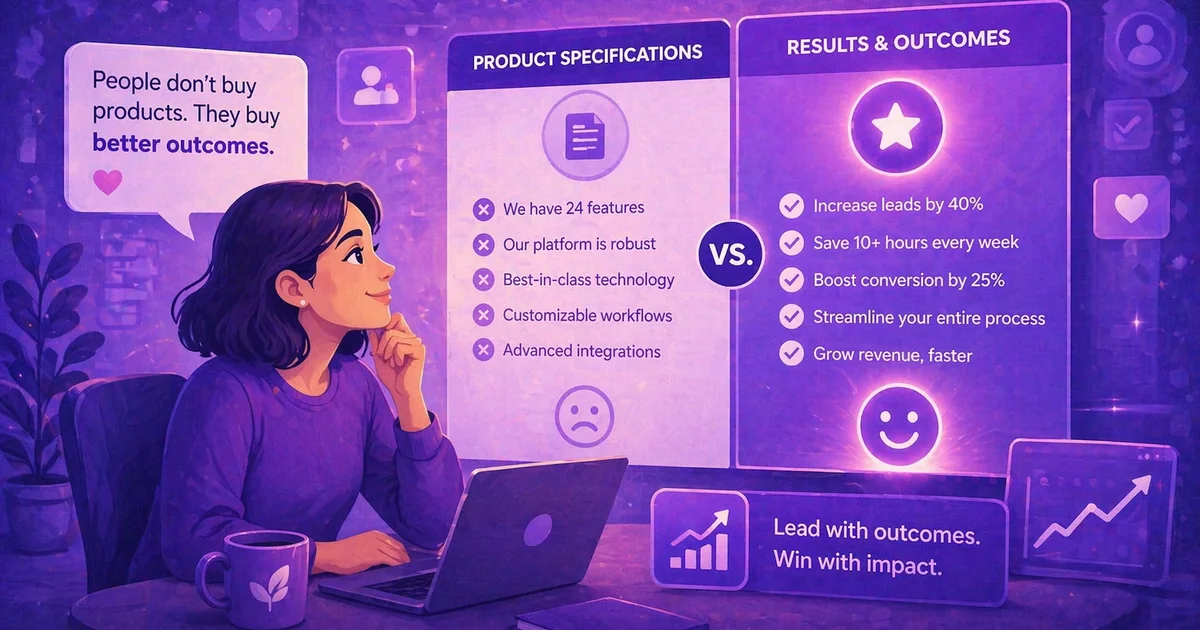
Most small business owners struggle with messaging that sounds impressive but drives zero sales. They list features, tout specifications, and wonder why customers scroll past their content. The real problem isn't weak features—it's weak brand messaging strategy that focuses on what products do instead of what customers achieve.
When you shift your brand messaging strategy from features to customer outcomes, you speak directly to what motivates purchasing decisions. Customers don't buy products for their specifications—they buy transformation, results, and solutions that improve their lives or businesses. Outcome-focused messaging connects with real needs and drives action.
Why This Shift Changes Everything
Your messaging framework determines whether prospects see value or just another product pitch.
The Psychology Behind Why Outcomes Win
Customer-focused messaging works because it aligns with how people actually make decisions. Nike exemplifies this approach perfectly—they don't sell athletic shoes with better cushioning technology. They sell empowerment, achievement, and the confidence to "Just Do It."
- Outcomes address emotional triggers: People buy to solve problems or achieve aspirations. When you lead with the transformation your product delivers, you tap into the real motivations behind purchase decisions. A project management tool doesn't sell task organization—it sells the peace of mind that comes from never missing a deadline.
- Features require mental translation: Customers must figure out how specifications benefit them personally. This creates friction and cognitive load that kills conversions. Most people won't do this work for you, especially when competitors speak their language directly.
- Outcomes differentiate naturally: While competitors list similar features, you own unique territory by focusing on specific results your ideal customers want most. A accounting software company might emphasize "sleep better knowing your books are bulletproof" while others talk about automated reconciliation features.
- Results create emotional investment: When prospects envision their improved future state, they become mentally invested in achieving that outcome through your solution. This psychological commitment drives purchasing momentum that feature lists never achieve.
Small businesses see immediate improvements when they test outcome-focused messaging because it removes the guesswork for prospects. Instead of wondering "what's in it for me," the value becomes crystal clear.
Building Your Messaging Hierarchy That Converts
Smart messaging frameworks follow a specific order that maximizes impact: outcomes first, emotional benefits second, then features and pricing as supporting evidence.
- Start with transformational outcomes: Open every piece of marketing with the end result customers want. HubSpot doesn't lead with email automation features—they promise "inbound marketing that drives results." This immediately positions them as the path to growth rather than another software tool.
- Layer in emotional benefits: Connect the practical outcome to how it feels to achieve it. Slack doesn't just promise better team communication—they deliver the relief of finally having "where work happens" instead of scattered, chaotic collaboration across multiple platforms.
- Support with selective features: Use specifications strategically to build credibility and address specific concerns. But always connect features back to outcomes. "AI-powered scheduling" becomes "never waste time on meeting coordination again."
- Include social proof last: Let customer success stories and testimonials validate that others achieved the promised outcomes. This removes risk and provides the final push toward purchase decisions.
The Barbecue Test for Messaging
Effective brand positioning uses the "barbecue exercise"—if you can't explain what you do at a neighborhood cookout without industry jargon, your messaging needs work. Strip away technical language and focus on relatable outcomes that any person would understand and value.
Common Messaging Mistakes That Kill Conversions
Even well-intentioned small business owners fall into predictable traps that sabotage their customer-focused messaging efforts.
- Leading with features for sophisticated buyers: Advanced prospects who understand your product category might appreciate detailed specifications, but they still need to see outcomes first. Feature-heavy messaging works only when customers already connect those features to personal value—and most don't make this connection automatically.
- Assuming customers understand implications: Business owners often think their product benefits are obvious. But customers live in different worlds with different priorities. What seems clear to you might be completely unclear to them without explicit outcome statements.
- Using generic benefit language: Vague promises like "increased efficiency" or "better results" don't create emotional resonance. Specific outcomes like "finish your weekly reports in 30 minutes instead of 3 hours" paint clear pictures that prospects can envision and desire.
- Mixing messaging for different buyer stages: Early adopters want customizable solutions and cutting-edge capabilities. The late majority wants proven, low-risk options with clear ROI. Your messaging must match where prospects sit in the technology adoption lifecycle.
The most successful small business branding speaks to specific pain points with concrete outcome promises. This approach cuts through marketplace noise and positions you as the obvious solution for target customers.
What the Data Says
Research consistently shows that outcome-focused approaches outperform feature-heavy alternatives across industries and business sizes.
Note: The research sources provided valuable strategic insights about messaging hierarchies and customer psychology, but did not include specific quantifiable statistics about conversion rates or performance metrics comparing features versus outcomes in brand messaging campaigns.
Frequently Asked Questions
Should I never mention features in my marketing?
Features play important supporting roles in benefit driven marketing, but they should never lead your message. Use specifications to build credibility and address specific objections after you've established the outcome value. Risk-averse buyers especially need feature details to feel confident in their purchase decisions.
How do I identify the right outcomes for my audience?
Start by gathering direct customer feedback about their biggest pain points and desired end states. Look at what they complain about most and what success looks like in their world. The most powerful outcomes solve urgent problems or deliver aspirational results that prospects think about regularly.
What if my competitors also focus on outcomes?
Dig deeper into specific outcomes that matter most to your ideal customer segment. While competitors might promise generic benefits, you can own territory around particular results, customer types, or unique approaches to achieving those outcomes. Specificity wins over generality every time.
Key Takeaways
- Lead every marketing message with the transformation or result customers want most
- Use features strategically to support outcome claims, never as the primary selling point
- Test your messaging with the barbecue exercise—eliminate jargon that regular people wouldn't understand
- Match your outcome focus to your buyer's stage in the technology adoption lifecycle
- Gather direct customer feedback to identify the specific pain points and aspirations that drive purchasing decisions
Transform Your Brand Message Into a Customer Magnet
Generic feature lists make you invisible in crowded markets. Outcome-focused messaging makes you the obvious choice for customers who need exactly what you deliver.
Ready to build a brand message that actually works? BrandBlueprint.ai creates your complete brand messaging strategy in minutes.