
The Problem with Generic Brand Messages
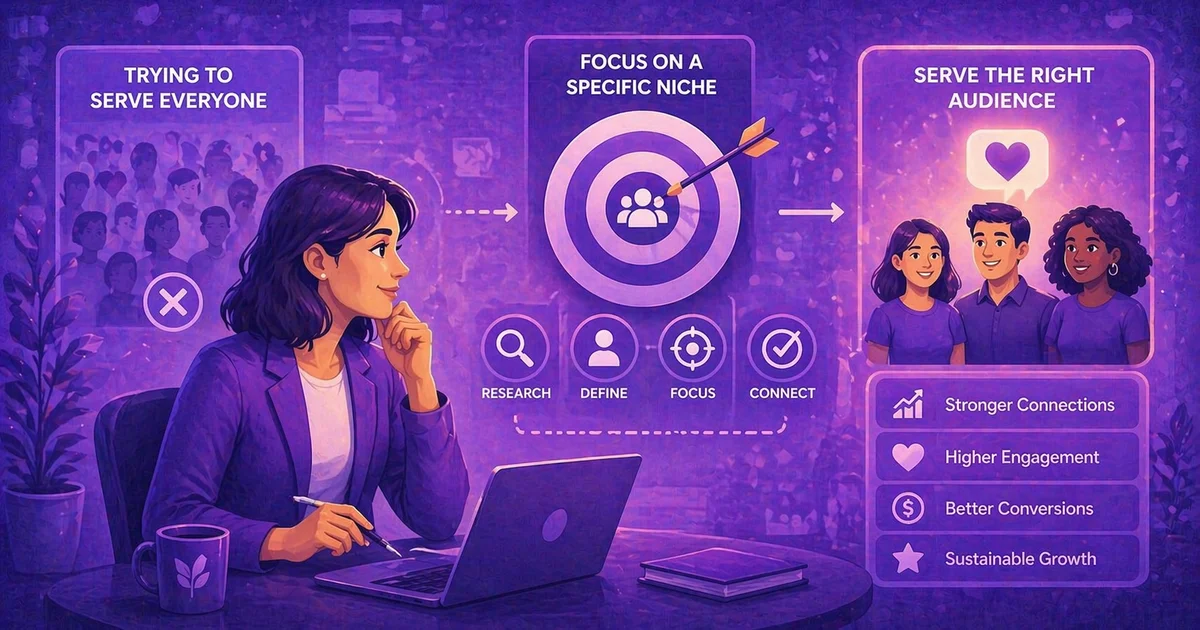
Small businesses often make a costly mistake when developing their brand positioning strategy. They try to appeal to everyone instead of focusing on a specific audience. This broad approach dilutes their message and makes them invisible in crowded markets.
Broad brand positioning fails because it creates generic messaging that doesn't resonate with anyone. When small businesses try to be everything to everyone, they become nothing to anyone, wasting resources on unfocused marketing efforts that lack the power to build customer loyalty or drive meaningful growth.
The Real Cost of Playing It Safe
When you spread your brand message too thin, you lose the ability to connect deeply with the customers who actually matter to your business.
Why Small Businesses Fall Into the Broad Positioning Trap
Many small business owners believe that casting a wider net will catch more customers. This thinking seems logical on the surface, but it ignores how modern consumers make purchasing decisions.
- Fear of Missing Potential Customers: You worry that narrowing your focus will exclude potential buyers. In reality, broad positioning dilutes your message and makes it harder to stand out in any meaningful way. Generic appeals fail to create the emotional connections that drive purchasing decisions.
- Limited Resources Lead to Shortcuts: Small teams often take the path of least resistance by creating one-size-fits-all messaging. This approach seems efficient but actually wastes your limited marketing budget on campaigns that fail to resonate with any specific group.
- Competitor Confusion: When you see larger competitors serving diverse audiences, you might think you need to match their breadth. However, small businesses cannot compete on scale, so broad positioning automatically puts you at a disadvantage.
- Misunderstanding Market Research: Surface-level market analysis might suggest multiple profitable segments exist. Without deeper research into customer motivations and unmet needs, you end up with positioning that sounds good on paper but fails in practice.
Here's what this means for you: Every dollar spent on broad messaging is a dollar that could have created deeper connections with your ideal customers. The businesses that win in competitive markets are those that become the obvious choice for a specific type of customer.
The Hidden Dangers of Unfocused Brand Messaging
Broad brand positioning creates cascading problems throughout your entire marketing ecosystem. These issues compound over time, making it increasingly difficult to build momentum.
- Resource Dilution Across Too Many Channels: When your brand messaging framework tries to serve multiple audiences, your marketing efforts get scattered across different platforms and tactics. You end up with weak presence everywhere instead of strong presence somewhere specific.
- Confusing Customer Journey Experiences: Prospects receive mixed signals about who you serve and what problems you solve. This confusion extends their decision-making process and often leads them to choose competitors with clearer positioning.
- Internal Team Alignment Problems: Your sales team struggles to qualify leads effectively when your positioning doesn't clearly define ideal customers. Marketing creates content that doesn't support sales conversations, leading to wasted effort and missed opportunities.
- Competitive Vulnerability: Trying to be everything to everyone results in being nothing to anyone, making your business vulnerable to focused competitors who own specific niches in your market.
Why Generic Messaging Fails to Build Trust
Trust develops when customers see consistent evidence that you understand their specific situation. Broad messaging cannot provide this level of specificity, leaving potential customers uncertain about your ability to solve their unique problems.
How Successful Small Businesses Position Themselves
The most successful small businesses follow a different approach entirely. They identify a specific niche where they can dominate and build their entire brand around serving that audience exceptionally well.
- Niche Specialization Creates Market Authority: A local bakery positioned as offering gluten-free treats for families with allergies grew significantly by avoiding broad "best bakery" claims. This narrow focus builds memorability and loyalty because customers know exactly what to expect and when to choose this business.
- Authentic Strengths Drive Differentiation: An eco-friendly plumbing service claims the position of "eco-friendly plumbing experts" with water-saving focus. This approach differentiates them from general plumbers without requiring them to compete on scale or price alone.
- Problem-Specific Solutions Command Premium Pricing: Direct-trade coffee shops own "relationships with specific farmers" for unique stories and experiences that chains cannot replicate. This positioning justifies higher prices because customers understand the specific value they receive.
- Geographic and Demographic Focus: Some successful businesses use positioning like "100 km local-sourced produce" to build loyalty within specific communities. This approach creates strong local connections that larger competitors struggle to match.
The key insight here is that concentration of resources on targeted initiatives creates more impact than spreading efforts across broad audiences. When you become known for solving specific problems for specific people, word-of-mouth referrals become more targeted and valuable.
Building Your Focused Brand Positioning Strategy
Creating effective brand positioning requires a systematic approach that starts with understanding exactly who you serve best and what unique value you provide.
- Audit Your Current Customer Base: Look at your most profitable and satisfied customers to identify patterns in demographics, psychographics, and problem types. These patterns reveal your natural positioning opportunities.
- Research Competitor Positioning Gaps: Audit competitors to find underserved gaps, then claim one boldly in all communications. Market research often reveals specific customer needs that generalist competitors ignore.
- Create Detailed Buyer Personas: Go beyond basic demographics to understand the specific pains and desires of your ideal customers. This depth enables you to avoid generic positioning and create messages that resonate emotionally.
- Develop Your Positioning Statement: Use the template "For [target audience], [brand] is the [category] that [benefit] because [reason to believe]" to create clarity around your unique market position.
- Test and Refine Your Message: Start with one focused message and measure its effectiveness before expanding. Small businesses win by perfecting their core positioning before attempting to serve additional segments.
Remember that smart positioning strategy makes your brand competitive by targeting people who matter most to your business success.
What the Data Says About Narrow vs. Broad Positioning
While specific statistics on broad versus narrow positioning are limited in available research, the pattern across successful small business case studies is clear:
- Focused positioning leads to measurable growth: The gluten-free family bakery example shows how targeting allergy families specifically, rather than trying to be the "best bakery for all," creates sustainable competitive advantages.
- Niche specialization outperforms generalist approaches: Examples like accounting for indie direct-to-consumer brands with specific revenue ranges demonstrate how narrow focus enables small teams to compete effectively against larger generalist firms.
- Geographic and value-based positioning creates loyalty: Local sourcing and environmental positioning examples show how specific values-based positioning builds customer relationships that transcend price competition.
The consistent theme across successful small business positioning is that specificity creates stronger customer connections than broad appeals, leading to higher customer lifetime value and more effective word-of-mouth marketing.
Frequently Asked Questions
Won't narrow positioning limit my potential market size?
Narrow positioning actually expands your effective market by making you the obvious choice for specific customers. When you try to appeal to everyone, you become invisible to everyone. Focused positioning creates word-of-mouth referrals and customer loyalty that broad approaches cannot match.
How do I know if my positioning is too broad?
Your positioning is too broad if your marketing messages could apply to any business in your industry. Specific positioning should clearly indicate who you serve, what problems you solve, and why customers should choose you over competitors. Generic language is a clear warning sign.
Can I serve multiple market segments with different positioning?
Small businesses should master one positioning before attempting multiple segments. Too many positioning types create mixed signals that confuse customers and dilute marketing effectiveness. Focus on dominating one niche first, then consider expansion once you have established market authority.
Key Takeaways
- Broad brand positioning wastes marketing resources by creating generic messages that fail to resonate with specific customer groups
- Successful small businesses choose narrow positioning to become the obvious choice for specific types of customers
- Focused positioning enables premium pricing and stronger customer relationships than competing on generic benefits
- Your most profitable customers reveal natural positioning opportunities that competitors often overlook
- Effective niche marketing strategy starts with detailed understanding of specific customer problems and motivations
Stop Wasting Money on Generic Brand Messages
Your small business cannot afford to blend in with every other company claiming to serve everyone. The businesses winning in your market are those with clear, focused brand voice development that speaks directly to specific customer needs.
Ready to build a brand message that actually works? BrandBlueprint.ai creates your complete brand messaging strategy in minutes.