
Understanding Your Buyer's Journey Transforms Marketing Performance
Most business owners create content without understanding when their customers actually want to hear from them. This disconnect costs businesses millions in wasted marketing spend and lost sales opportunities. Smart businesses use buyer's journey mapping to deliver the right message at the perfect moment in their customer's decision process.
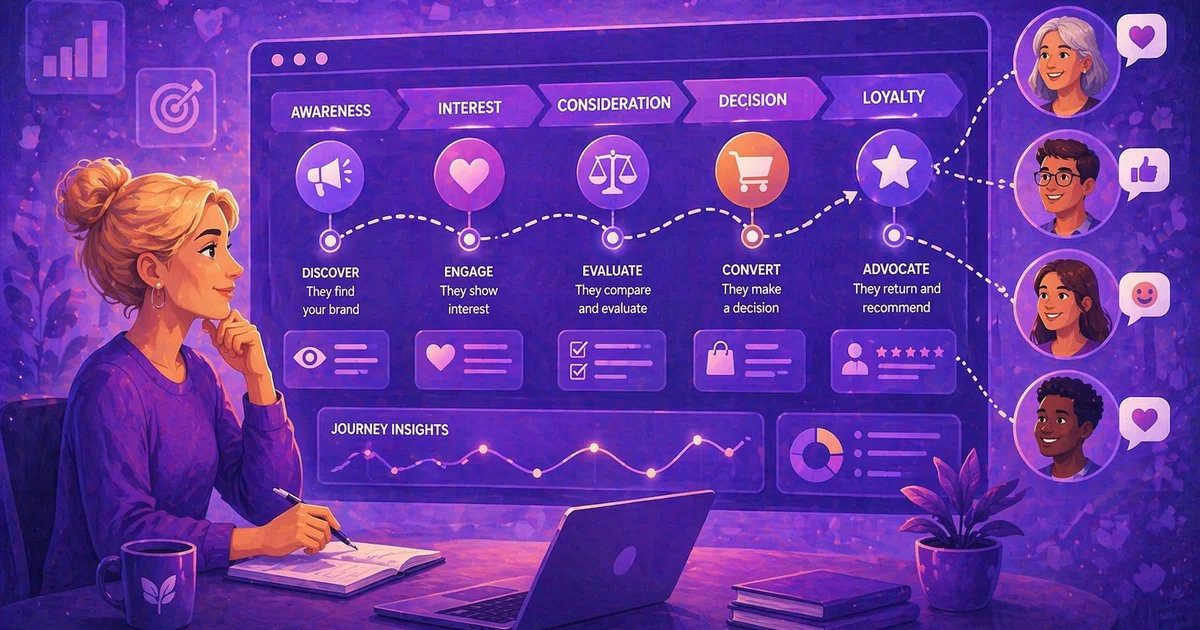
Buyer's journey mapping visualizes your customer's complete path from problem recognition to purchase decision, identifying their thoughts, feelings, and content needs at each stage. This strategic approach aligns your marketing efforts with natural buying behaviors, creating more effective content that guides prospects toward purchase while reducing sales friction.
Why Traditional Marketing Misses the Mark
Without mapping your buyer's journey, you're essentially throwing content at the wall and hoping something sticks.
The Three Critical Stages Every Business Must Master
Successful companies like Salesforce use detailed journey mapping to align content across awareness, consideration, and decision stages, matching each piece of content to their buyer's mental state.
- Awareness Stage Content: Your prospects realize they have a problem but don't know solutions exist yet. They search for educational content using informational keywords like "why is my dishwasher not draining" rather than product-specific terms. Focus on problem identification and early education without pitching your solution.
- Consideration Stage: Buyers now understand their problem and actively research potential solutions. They compare different approaches and evaluate various options. Your content should demonstrate expertise while positioning your solution as viable, using commercial keywords that show purchase intent.
- Decision Stage Marketing: Prospects have narrowed their choices and need final validation before purchasing. They want proof your solution works, often searching for specific brand names, pricing information, or comparison reviews. Your content should remove final objections and simplify the buying process.
The key insight here: Content must match search intent at each stage, moving from informational queries in awareness to transactional searches in decision phases.
Building Your Content Marketing Funnel Architecture
Smart content marketing funnels mirror natural buying behaviors rather than forcing prospects through arbitrary stages. Linear buyer journey maps work best for beginners before advancing to more sophisticated models.
- Top-of-Funnel Awareness Content: Create educational blog posts, how-to guides, and problem-solving resources that address your buyer's initial pain points. Think "Ultimate Guide to..." or "Why Your [Industry] Strategy Isn't Working" content that builds trust without selling.
- Middle-of-Funnel Consideration Content: Develop comparison guides, case studies, webinars, and detailed solution explanations. Your prospects want proof that solutions work and need to understand different approaches before committing to yours.
- Bottom-of-Funnel Decision Content: Offer product demos, free trials, pricing guides, customer testimonials, and ROI calculators. Remove friction by answering specific objections and making the next step crystal clear.
- Post-Purchase Loyalty Content: Don't stop at the sale. Create onboarding materials, advanced tutorials, and exclusive resources that turn customers into advocates who refer others to your business.
Your content architecture should feel like a natural conversation, not a sales pitch disguised as helpful information.
Mapping Content to Search Intent
Different journey stages correspond to specific search intentions. Awareness stage buyers use informational keywords, consideration stage searches show commercial intent, while decision stage queries become navigational or transactional.
Match your content formats to these search patterns: blog posts for awareness, comparison pages for consideration, and landing pages with clear calls-to-action for decision stage prospects.
Creating Buyer Personas That Drive Content Decisions
Effective journey maps start with detailed buyer personas that capture needs, motivations, and challenges from the customer's perspective rather than your internal processes.
- Demographics and Firmographics: Understand who your buyers are, but don't stop there. Surface-level data won't help you create compelling content that resonates emotionally with your audience.
- Pain Points and Challenges: Dig deep into what keeps your buyers awake at night. What problems are they trying to solve? What obstacles stand in their way? Your content should speak directly to these concerns.
- Goals and Motivations: Understand what success looks like for your buyers. Are they trying to save time, increase revenue, reduce costs, or avoid risks? Frame your content around their desired outcomes.
- Information Sources and Channels: Where do your buyers go for information? Do they prefer detailed white papers, quick video explanations, or peer recommendations? Meet them where they already spend time.
Building separate maps for each key stakeholder proves essential, especially when multiple decision-makers influence purchases.
What the Data Says
The research reveals several critical insights about effective buyer's journey mapping:
- Multiple Stakeholder Involvement: Forrester research shows that mapping the 5 W's (Who, What, Where, When, Why) for any model creates more comprehensive buyer understanding.
- Emotion-Centered Mapping: Journey maps should represent thoughts and actions from awareness to decision, similar to customer experience maps that focus on prospect perspective.
- Friction Point Identification: Comprehensive maps that pull insights from multiple teams help identify friction points that prevent prospects from advancing through stages.
Note: The provided research focused on methodology and frameworks rather than statistical performance data.
Frequently Asked Questions
What's the difference between a buyer's journey map and a sales funnel?
A buyer's journey map focuses on your customer's perspective, emotions, and decision-making process, while a sales funnel represents your internal process for moving prospects toward purchase. Journey maps help you understand what your buyers think and feel, making your sales funnel more effective by aligning with natural buying behaviors.
How often should I update my buyer's journey maps?
Review and update your journey maps quarterly or whenever you notice significant changes in customer behavior, market conditions, or your product offering. Customer feedback, sales team insights, and content performance data should inform regular refinements to keep your maps accurate and actionable.
Can I use the same content for multiple journey stages?
While some evergreen content may serve multiple stages, the most effective approach creates stage-specific content that matches your buyer's mindset and information needs. Repurpose core messages across formats rather than using identical content for different stages.
Key Takeaways
- Map content to match natural search intent progression from informational to transactional queries
- Create separate buyer personas for each key stakeholder involved in purchase decisions
- Focus on customer perspective and emotions rather than internal sales processes
- Build linear journey maps first before advancing to complex multi-path models
- Use insights from sales teams, customer feedback, and content performance to refine maps
- Align content formats with stage-appropriate buyer needs and preferred information sources
- Include post-purchase stages to turn customers into advocates and reduce churn
Stop Guessing What Your Customers Want to Hear
Most businesses waste marketing budget on content that misses the mark because they don't understand their buyer's journey. When you align your messaging with how people actually make decisions, your content starts converting prospects instead of confusing them.
Ready to build a brand message that actually works? BrandBlueprint.ai creates your complete brand messaging strategy in minutes.