
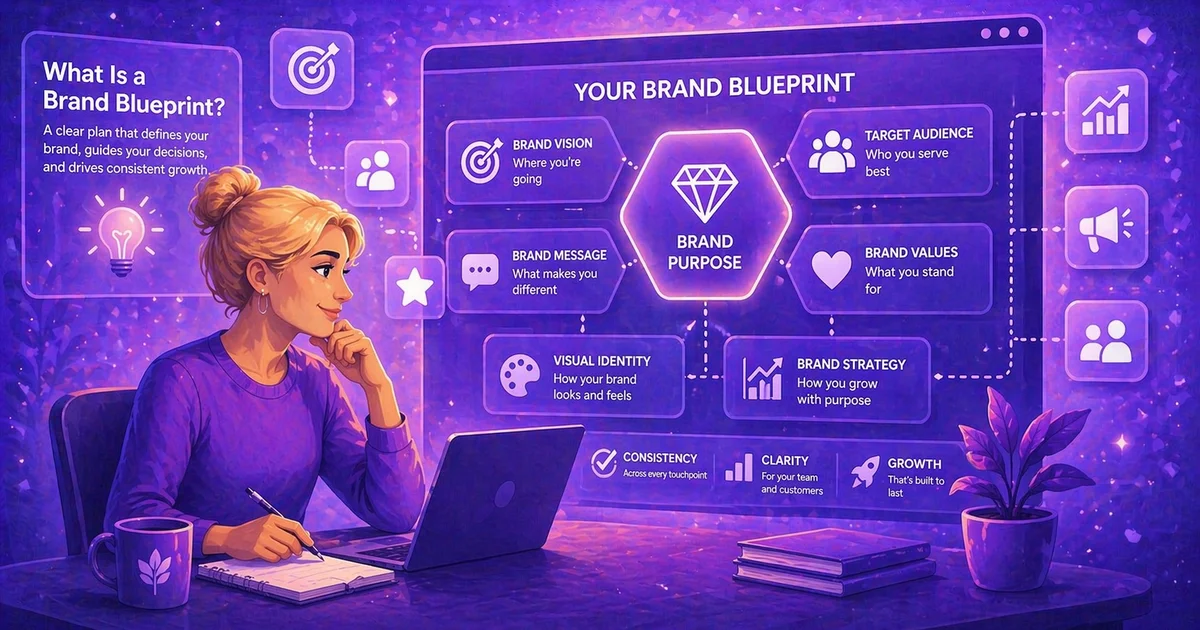
Your business has a story, values, and a unique way of solving customer problems. But without a clear framework to guide how you express these elements consistently, your brand message gets muddied, confused, or forgotten entirely. This disconnect costs small businesses customers who can't figure out what you stand for or why they should choose you over competitors.
A brand blueprint is a strategic framework that outlines your brand's core purpose, values, personality, and messaging guidelines to ensure consistent communication across every customer touchpoint. It serves as the foundational document that transforms abstract brand strategy into practical, actionable guidance for how your business looks, sounds, and behaves in every interaction.
Why Small Business Branding Falls Apart Without Structure
Most small business owners understand they need "good branding," but they approach it backwards. They start with a logo, pick some colors, maybe write a tagline, and call it done. Six months later, their website sounds different from their social media, their sales conversations don't match their marketing materials, and customers receive mixed signals about what the business actually does.
Brand blueprints ensure cohesive messaging and visual identity across all channels by providing teams with strategic boundaries within which they can act confidently. Without this foundation, even well-intentioned marketing efforts create confusion rather than clarity.
The problem compounds when you hire help. A freelance copywriter creates content based on their interpretation of your brand. A designer makes visual choices that feel right to them. A virtual assistant answers customer service emails in their own voice. Each person fills in the blanks differently, creating a fractured brand experience that weakens trust and recognition.
The Core Components of an Effective Brand Blueprint
Brand Foundation Elements
Brand Purpose: Why your business exists beyond making money. This isn't a mission statement full of corporate speak. It's the driving force that motivates your daily decisions and resonates with customers who share similar values.
Core Values: The non-negotiable principles that guide how you operate. These should be specific enough to influence real business decisions, not generic concepts like "integrity" or "excellence" that could apply to any company.
Brand Promise: The consistent value or experience customers can expect every time they interact with your business. This becomes your North Star for quality standards and service delivery.
Audience and Positioning
Your brand blueprint must include detailed profiles of your ideal customers. Customer personas with fictional bios and photos ground your branding decisions in real market insights rather than assumptions. These personas inform everything from the words you choose to the problems you emphasize in your marketing.
Positioning defines how you want to be perceived relative to competitors. This section should clearly articulate what makes you different and why that difference matters to your specific audience. Avoid vague differentiators like "better customer service" and focus on concrete, measurable advantages.
Voice and Messaging Guidelines
- Brand Personality: The human characteristics your brand would have if it were a person. Is your brand authoritative or approachable? Sophisticated or down-to-earth? These traits should align with your audience's preferences and your industry context.
- Tone of Voice: How your personality comes through in written and spoken communication. This includes guidelines for formality level, humor usage, technical language, and emotional expression.
- Key Messages: The core ideas you want associated with your brand. These should address your audience's primary concerns and position your solution as the logical choice.
How Brand Blueprints Transform Customer Experience
Consider how Apple maintains consistent brand expression across every touchpoint. Their blueprint defines minimalist design principles, innovation-focused messaging, and premium positioning that appears identically whether you're in an Apple Store, browsing their website, or unboxing a product. This consistency builds trust because customers know exactly what to expect.
Blueprints enable brands to shape customer perceptions deliberately through cohesive storytelling across digital spaces. When your social media voice matches your email newsletters, which align with your website copy and sales presentations, customers develop confidence in your professionalism and reliability.
The transformation happens in subtle but powerful ways. Instead of customers wondering if they're dealing with the same company across different channels, they experience seamless interactions that reinforce your brand's core promises. This consistency breeds familiarity, and familiarity builds trust faster than any individual marketing tactic.
Visual Identity Integration
Your brand blueprint extends beyond words to encompass visual elements that support your messaging strategy. Color palettes, typography choices, photography styles, and design principles should all reinforce the same brand personality you've defined in your messaging guidelines.
Nike exemplifies this integration through their bold, athletic visuals that support their empowering brand voice and "Just Do It" messaging. Every visual choice reinforces their core purpose of empowering athletes, creating a unified brand experience that spans global campaigns and retail environments.
Building Your Small Business Brand Messaging Blueprint
Start With Strategic Foundation
Before diving into tactics, establish your brand's core identity. Define what you do and what you are not to create clearer articulation of your value proposition. This exercise forces you to make difficult choices about positioning and helps prevent brand dilution.
Document your brand purpose in one clear sentence. Test this statement by asking whether it would help an employee make a difficult customer service decision or guide a marketing choice between two different approaches. If your purpose statement feels too abstract to influence real decisions, refine it until it becomes actionable.
Map your core values to specific behaviors and policies. Instead of listing "customer focus" as a value, define what customer focus means in practice: response time standards, quality guarantees, or problem-resolution processes. This specificity helps team members embody your values consistently.
Develop Audience-Centered Messaging
Create detailed customer personas that go beyond demographics to include motivations, frustrations, and decision-making processes. Interview your best existing customers to understand why they chose you and what alternatives they considered. This research reveals the specific language and benefits that resonate with your ideal audience.
Craft key messages that address your persona's primary concerns at each stage of their buying journey. Early-stage messages should acknowledge their problems and position you as an expert guide. Later-stage messages should address specific objections and demonstrate proof of your capabilities.
Test your messaging with real customers before finalizing your blueprint. Ask current clients to read your core messages and explain what they understand about your business. Their feedback reveals gaps between your intended communication and actual perception.
Create Practical Implementation Guidelines
Small businesses should prioritize a practical approach focused on essential non-negotiables rather than exhaustive documentation. Start with a concise document that covers the most common communication scenarios your team faces.
Include specific examples of your brand voice in action. Instead of describing your tone as "friendly and professional," provide sample email responses, social media posts, and customer service scripts that demonstrate this voice. Concrete examples eliminate guesswork and ensure consistency.
Audit all customer touchpoints from packaging to invoices for alignment with your blueprint. Many businesses overlook opportunities to reinforce their brand through seemingly mundane interactions like confirmation emails or billing statements.
Common Brand Blueprint Mistakes to Avoid
Generic Brand Positioning
Many small businesses create brand blueprints that could apply to any company in their industry. Phrases like "committed to excellence" or "putting customers first" don't differentiate your brand or provide meaningful guidance for decision-making. Effective blueprints capture what makes your specific business unique and valuable.
Avoid copying successful brands in other industries without adapting their approach to your context. Starbucks' community-focused blueprint works because their business model supports prolonged customer visits and social interaction. This approach might fail for a service business that primarily interacts with customers remotely.
Overly Complex Documentation
Some businesses create comprehensive brand blueprints that become too unwieldy for regular use. A 50-page document with extensive rules and guidelines often sits unused while team members make inconsistent brand decisions. Focus on creating a reference tool that people will actually consult and follow.
Complexity also emerges when businesses try to account for every possible scenario in their initial blueprint. Start with common situations and add specificity as you encounter edge cases. This iterative approach keeps your blueprint practical and manageable.
Neglecting Implementation and Maintenance
Creating a brand blueprint is only the first step. Without ongoing training and reinforcement, even well-designed guidelines fail to influence daily operations. Schedule regular team reviews of brand standards and provide feedback when communications drift from established guidelines.
Your blueprint should evolve as your business grows and market conditions change. Review and update your brand guidelines annually to ensure they remain relevant and effective. Customer feedback, competitive landscape shifts, and business model changes may require adjustments to your brand positioning or messaging.
Measuring Brand Blueprint Success
Consistency Metrics
Track how well your team adheres to brand guidelines across different channels and touchpoints. Create a simple audit checklist based on your blueprint and review a sample of communications monthly. Look for deviations in voice, visual presentation, or key messaging.
Monitor customer feedback for references to brand perception. Comments about professionalism, clarity, or trustworthiness often reflect the success of your brand consistency efforts. Pay attention to whether customers mention the same brand attributes across different interaction points.
Customer Recognition and Recall
Effective brand blueprints improve customer recognition of your business across different contexts. Survey customers about their ability to identify your brand in blind tests or recall specific brand attributes after exposure to your marketing materials.
Track how often customers use your brand language when describing your business to others. When prospects mention the same benefits and characteristics you've outlined in your blueprint, it demonstrates successful brand communication and memorability.
Internal Team Confidence
Measure how confident team members feel about representing your brand consistently. Survey employees about their understanding of brand guidelines and their comfort level making brand-aligned decisions independently. High confidence scores indicate effective blueprint implementation.
Monitor the frequency of brand-related questions from team members. As your blueprint becomes more embedded in daily operations, employees should need less guidance about voice, messaging, and visual choices.
What the Data Says
Brand consistency across all platforms increases revenue by up to 23% according to research by Lucidpress, demonstrating the direct financial impact of implementing comprehensive brand guidelines that ensure unified messaging and visual presentation.
Companies with consistent brand presentation are 3.5 times more likely to experience strong brand visibility than those with inconsistent branding, highlighting how systematic brand blueprint implementation directly affects market recognition and competitive positioning.
Customers are willing to pay 15-20% more for brands that provide consistent experiences across all touchpoints, showing how brand blueprint adherence translates into pricing power and customer loyalty.
Businesses with documented brand guidelines see 32% faster employee onboarding compared to those without formal brand standards, indicating how clear brand blueprints streamline internal operations and reduce training costs.
90% of consumers expect consistent interactions with brands across all channels, emphasizing the importance of having systematic brand guidelines that ensure uniformity in messaging, voice, and visual presentation across digital and physical touchpoints.
Frequently Asked Questions
How detailed should a small business brand blueprint be?
Start with a practical one to two-page document covering your core purpose, target audience, key messages, and basic voice guidelines. You can add more detailed sections as your business grows and your team needs more specific guidance for complex scenarios.
How often should I update my brand blueprint?
Review your brand blueprint annually or when significant business changes occur, such as expanding into new markets, launching major products, or shifting your target audience. Minor updates can happen quarterly based on team feedback and customer insights.
Can I create a brand blueprint myself or do I need professional help?
Small business owners can create effective brand blueprints using strategic thinking and customer research, though professional guidance helps avoid common pitfalls and ensures comprehensive coverage of all necessary elements for successful brand implementation.
Key Takeaways
- A brand blueprint serves as your foundational framework for consistent communication, defining purpose, values, messaging, and visual identity to prevent mixed signals that confuse customers and weaken trust.
- Focus on practical implementation over comprehensive documentation by creating a concise reference tool that your team will actually use and follow in daily brand decisions.
- Ground your blueprint in real customer insights through detailed personas and direct feedback rather than assumptions about what your audience wants or needs.
- Audit all customer touchpoints regularly to ensure your blueprint translates into consistent experiences across every interaction point, from packaging to customer service emails.
- Measure success through consistency metrics, customer recognition, and team confidence to continuously improve your brand blueprint's effectiveness and business impact.
How Your Brand Blueprint Can Help with This
A comprehensive brand messaging strategy eliminates the guesswork and inconsistency that plague most small business communications. Instead of hoping your team interprets your brand correctly, you get clear guidelines that ensure every customer interaction reinforces your core value proposition and builds recognition. Ready to put this into practice? BrandBlueprint.ai builds your complete brand messaging strategy -- including the section that covers exactly what we talked about here.