
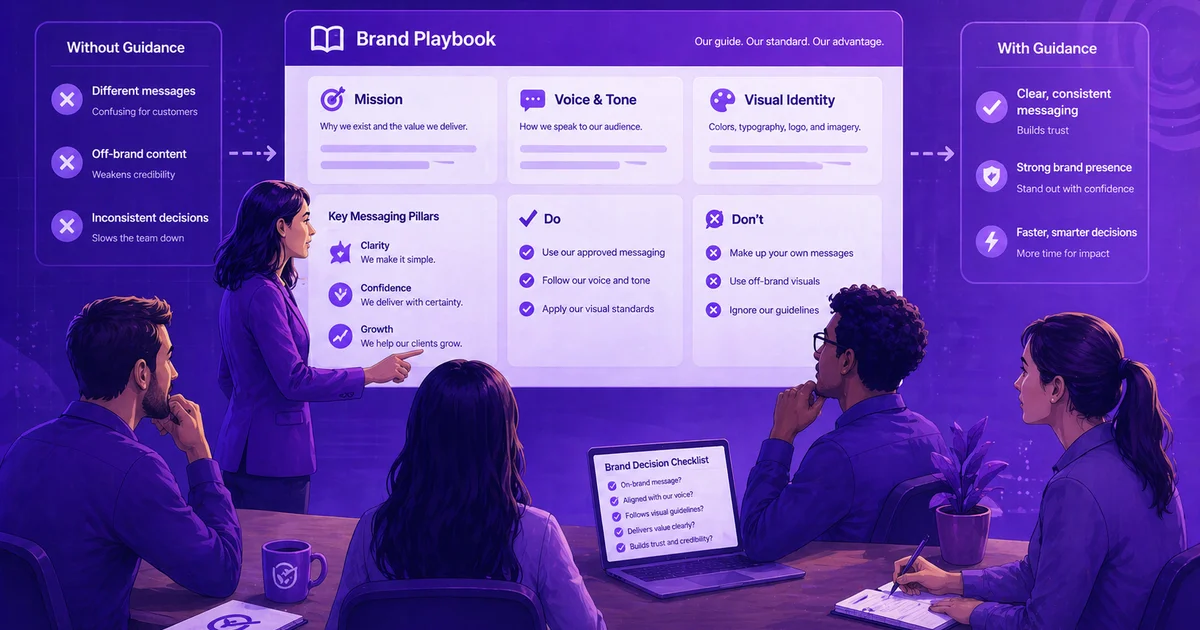
Brand guidelines gather dust on hard drives while teams struggle to maintain consistent messaging across every touchpoint. The problem isn't creating the guidelines—it's making sure everyone actually uses them. Your brand's visual identity, tone of voice, and messaging strategy only work when your entire team understands and applies them consistently.
The most effective way to ensure brand consistency is treating your brand guidelines as living training materials rather than static reference documents. This means creating interactive workshops, practical exercises, and ongoing reinforcement systems that embed your brand standards into daily workflows.
Why Traditional Brand Guidelines Fail Teams
Most brand guidelines read like technical manuals. They explain logo usage, specify color codes, and outline messaging principles—but they don't teach people how to make real decisions. When your marketing coordinator needs to choose between two headline options or your sales team crafts a proposal, they need practical guidance, not just rules.
The disconnect happens because guidelines document what your brand should look like without explaining how to think like your brand. Your team members need to understand the reasoning behind each choice, not just memorize the specifications.
Consider how Apple approaches this challenge. Their internal brand training doesn't just show employees the correct logo placement—it teaches them to evaluate every design decision through the lens of simplicity and elegance. This deeper understanding helps team members make brand-consistent choices even in situations the guidelines never anticipated.
Converting Guidelines Into Interactive Learning
Transform Static Rules Into Decision Frameworks
Visual Identity Exercises: Instead of showing correct and incorrect logo usage, create scenarios where team members practice making placement decisions. Present them with different contexts—email signatures, trade show banners, social media posts—and have them explain their reasoning.
Voice and Tone Workshops: Record your team rewriting generic copy in your brand voice. Start with neutral product descriptions and have them transform the language to match your personality. This hands-on practice builds instinct for your brand's communication style.
Message Testing Sessions: Present common customer questions or objections. Have team members craft responses that align with your brand positioning and core messages. This bridges the gap between brand strategy and customer-facing communication.
The goal is developing judgment, not just following rules. When your team understands why you make certain brand choices, they can extend those principles to new situations without constant oversight.
Build Practical Application Tools
Your team needs resources that help them apply brand guidelines in real work scenarios. Create quick-reference cards for common decisions, template libraries that embed your brand voice, and checklists that ensure consistency across different content types.
Starbucks exemplifies this approach with their barista training program. New employees don't just memorize drink recipes—they learn the brand values that guide every customer interaction. The training connects specific actions (greeting customers, handling complaints, recommending products) to broader brand positioning around creating a "third place" between work and home.
This same principle applies to any team member who represents your brand. Your sales presentations, customer service emails, and social media posts all need to reflect the same brand personality and positioning.
Creating Brand Training That Sticks
Start With Brand Strategy, Not Visual Elements
Most teams jump straight to logo usage and color palettes, but effective brand training begins with strategy. Team members need to understand your target audience, competitive positioning, and core value proposition before they can make consistent brand decisions.
Begin each training session by reviewing customer personas and brand positioning. When everyone understands who you serve and how you differentiate from competitors, visual and messaging choices make more sense. Brand consistency studies show that fewer than 10% of B2B companies maintain very consistent branding, often because teams lack this foundational understanding.
Walk through your buyer's journey and explain how brand expression should evolve at each stage. The tone you use for awareness-stage content differs from conversion-focused messaging, even while maintaining the same brand personality.
Develop Brand Scenarios and Case Studies
Customer Complaint Responses: Show how your brand voice handles different types of customer issues. Practice writing responses that solve problems while reinforcing brand values.
Competitive Situations: Role-play scenarios where prospects compare your solution to competitors. Train team members to position your brand's unique value without directly attacking competitors.
Crisis Communication: Develop templates and talk tracks for negative reviews, product issues, or public relations challenges. Your brand voice should remain consistent even under pressure.
These scenarios help team members internalize brand guidelines by practicing application rather than just reading rules.
Measure Understanding Through Application
Traditional brand training ends with a quiz about logo specifications or color codes. Effective training measures whether team members can apply brand principles to new situations.
Instead of testing color hex codes, present unmarked brand examples and ask team members to identify which ones align with your guidelines and why. Show them customer emails, social media posts, or marketing copy and have them evaluate brand consistency.
This assessment approach reveals gaps in understanding while reinforcing the practical application of brand guidelines.
Making Brand Guidelines Accessible for Daily Use
Create Quick-Reference Resources
Your team shouldn't need to dig through a 50-page brand manual to write an email or create a social media post. Develop one-page quick guides for common tasks:
Email Signature Standards: Visual examples with approved layouts, fonts, and contact information formatting.
Social Media Voice Guide: Sample posts that demonstrate your brand personality across different platforms and content types.
Presentation Templates: Slide layouts with proper logo placement, color usage, and typography that team members can customize for specific needs.
Build Brand Decision Trees
Complex brand guidelines become more usable when you organize them around common decisions rather than brand elements. Create flowcharts that guide team members through typical choices:
When writing customer-facing content, should the tone be formal or conversational? The decision tree walks through audience, context, and message type to reach the right answer.
For visual content, how do you choose between different logo variations? The decision tree considers background colors, size constraints, and usage context to recommend the appropriate version.
These tools translate comprehensive brand guidelines into practical decision-making aids that team members can use without extensive brand expertise.
Embedding Brand Training Into Workflows
Integration With Existing Processes
Brand training works best when it connects to work people already do. Instead of standalone brand workshops, integrate brand principles into onboarding programs, content review processes, and regular team meetings.
During new employee orientation, include brand positioning alongside role-specific training. When someone joins your customer service team, they need to understand your brand voice as much as your return policy.
Incorporate brand checkpoints into content approval workflows. Before publishing any customer-facing material, require reviewers to confirm alignment with brand voice, visual standards, and messaging priorities.
Companies with great brands reduce hiring and training expenses by up to 50% because consistent brand presentation attracts employees who already align with company values.
Ongoing Reinforcement Systems
Brand guidelines aren't one-time training topics. Team members need regular reminders and updates as your brand evolves or as common mistakes emerge.
Monthly brand reviews can highlight recent examples of excellent brand execution alongside areas for improvement. Show successful campaigns, customer communications, or sales materials that exemplify brand guidelines in action.
Create a brand feedback system where team members can ask questions about specific situations. When multiple people face similar brand decisions, update your quick-reference guides or decision trees to address these common scenarios.
Nike demonstrates this ongoing approach through their "Brand Equity" training program. Rather than treating brand guidelines as fixed rules, they continuously reinforce how brand principles apply to new products, marketing campaigns, and market conditions.
Measuring Brand Training Effectiveness
Track Application, Not Knowledge
The success of brand training shows up in consistent execution, not quiz scores. Monitor actual brand implementation across different touchpoints and team members.
Review recent customer communications, marketing materials, and sales presentations for brand consistency. Look for patterns where certain teams or individuals consistently apply brand guidelines well, and identify areas where additional training might help.
Customer feedback often reveals brand inconsistencies before internal audits do. Pay attention to comments about mixed messages, unclear positioning, or visual inconsistencies across different interactions.
Document Common Brand Decisions
As your team applies brand guidelines to new situations, document the decisions for future reference. When someone asks how to handle a specific scenario, add the answer to your brand resource library.
This approach builds institutional knowledge while preventing the same brand questions from arising repeatedly. Your brand guidelines evolve from static rules into a growing resource that addresses real-world applications.
The most effective brand training creates a culture where consistent brand execution becomes automatic rather than requiring conscious effort from every team member.
What the Data Says
85% of companies have brand guidelines, but only 30% enforce them. The gap between having guidelines and using them costs businesses significant revenue and market recognition opportunities.
Consistent branding increases revenue by 10-20%, according to 68% of companies surveyed in 2026. This revenue impact comes from clearer customer communication and stronger brand recognition across touchpoints.
Brand color increases recognition by 80% when applied consistently. Visual consistency creates the foundation for brand recall, but only when teams understand and follow color guidelines across all materials.
90% of users expect similar brand experiences across different platforms and channels. Meeting this expectation requires training that helps team members maintain consistency regardless of the medium or context.
Consistent visual branding enjoys 33% higher brand recall compared to inconsistent presentation. This recall advantage compounds over time, making every brand touchpoint more effective at building recognition and trust.
Team Brand Training Questions
Q: How often should you conduct brand training for your team?
Initial brand training should happen during onboarding, with quarterly refreshers for all team members. Add targeted training whenever brand guidelines update or when you notice consistency issues in specific areas.
Q: What's the most important element to cover in brand training?
Start with brand positioning and target audience before covering visual or voice guidelines. Team members need to understand the strategic foundation before they can make consistent tactical decisions.
Q: How do you train remote teams on brand guidelines?
Create recorded training sessions, interactive online workshops, and digital brand resource libraries. Schedule regular virtual brand reviews where remote team members can ask questions and see examples of excellent brand execution.
Q: Should different departments receive different brand training?
Yes, customize training content for each department's specific brand touchpoints while maintaining consistent core messaging. Sales teams need different brand applications than customer service or marketing teams.
Q: How do you measure if brand training is working?
Monitor brand consistency across actual customer-facing materials, track customer feedback about mixed messages, and review whether team members can apply brand guidelines to new situations without extensive guidance.
Key Takeaways
- Transform static brand guidelines into interactive training experiences that teach decision-making, not just rule-following, so team members can apply brand principles to unexpected situations.
- Create practical tools like decision trees, quick-reference cards, and scenario-based exercises that connect brand strategy to daily work tasks across different departments and roles.
- Embed brand training into existing workflows and processes rather than treating it as standalone education, making brand consistency a natural part of how teams already work.
- Measure training effectiveness through actual brand application and customer-facing consistency rather than knowledge retention, focusing on real-world brand execution quality.
- Develop ongoing reinforcement systems that address new brand scenarios as they arise while building institutional knowledge that prevents repeated questions about brand decisions.
How Your Brand Blueprint Can Help with This
Your Brand Blueprint includes detailed messaging frameworks, brand personality definitions, and content pillars that form the strategic foundation every team member needs before learning tactical brand guidelines. The Brand Profile & Content Pillars section specifically provides the brand voice and positioning context that makes visual guidelines meaningful, while the Messaging Systems section gives you frameworks that translate into practical training scenarios.
Ready to put this into practice? BrandBlueprint.ai builds your complete brand messaging strategy—including the section that covers exactly what we talked about here.