
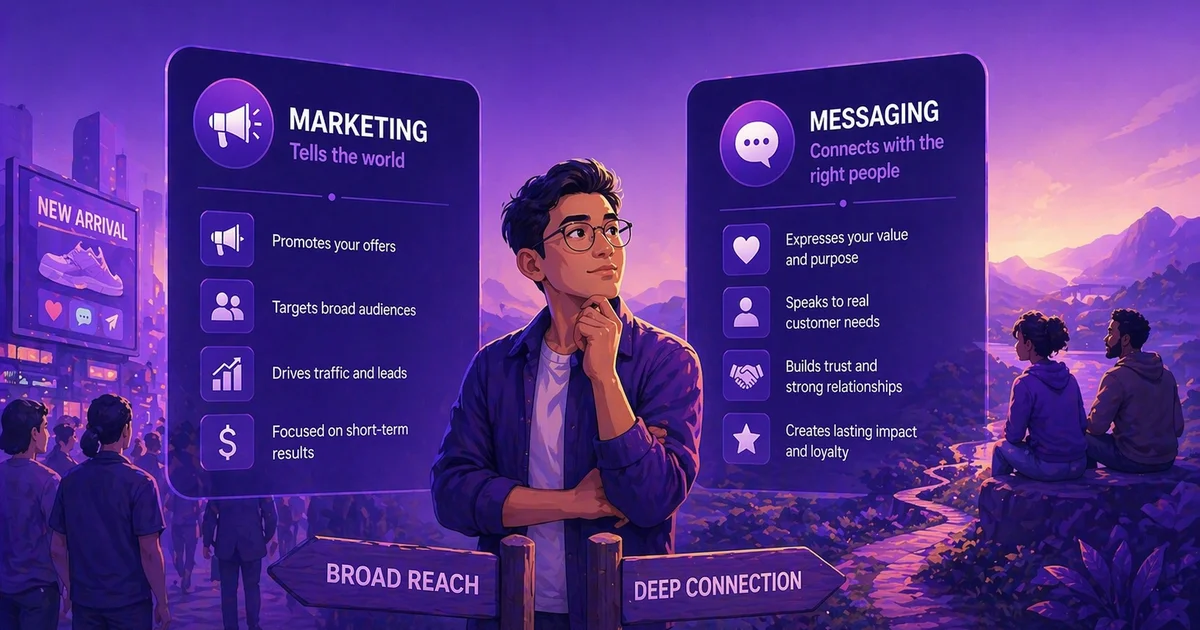
Small business owners often find themselves confused about what exactly separates marketing from messaging. You might think they're the same thing since both involve communicating with customers. But understanding this distinction could be the key to why your current efforts aren't converting prospects into paying customers the way you hoped they would.
Marketing and messaging serve different purposes in your business growth strategy. Brand messaging establishes who you are and what you stand for as a company, creating the foundation that informs all your communications. Marketing messaging takes those core brand elements and adapts them for specific campaigns, audiences, or products to drive particular actions like signing up for your email list or making a purchase.
Let's break down exactly how these two elements work together and why your business needs both to succeed.
What Is Brand Messaging (And Why It Comes First)
Brand messaging forms the foundation of everything you communicate about your business. It captures your company's core identity, values, and the unique value you bring to customers' lives.
Think of brand messaging as your business's personality made into words. It includes your mission, vision, values, and the overarching promise you make to customers. This messaging stays consistent across years and doesn't change with every new campaign or product launch.
Apple provides a perfect example of strong brand messaging. Their core message revolves around innovation, simplicity, and thinking differently. Whether they're launching a new iPhone, updating their computers, or introducing a completely new product category, that underlying brand identity remains constant. You always know you're experiencing an Apple product because their messaging consistently reflects those same core values.
Your brand messaging should answer fundamental questions about your business. Who are you as a company? What do you believe in? What transformation do you help customers achieve? How do you want people to feel when they interact with your brand?
For a local plumbing company, strong brand messaging might center on reliability and peace of mind. Their core message could be about being the trustworthy neighbor who shows up when you need them most, treats your home with respect, and fixes problems right the first time.
This foundational messaging then informs everything else they communicate. It shapes their website copy, their truck signage, how their technicians introduce themselves, and what they post on social media.
What Marketing Messaging Actually Does
Marketing messaging takes your brand foundation and makes it specific and actionable for particular situations. While brand messaging appeals broadly to your ideal audience, marketing messaging zooms in on specific needs.
This type of messaging varies dramatically based on who you're talking to, what you're trying to accomplish, and where potential customers are in their buying journey. You might have dozens or even hundreds of different marketing messages, all stemming from the same brand foundation.
Let's continue with our plumbing company example. Their brand messaging focuses on reliability and peace of mind. But their marketing messaging would adapt based on the situation:
For emergency plumbing situations, their marketing message might emphasize 24/7 availability and rapid response times. For planned bathroom renovations, the messaging might focus on craftsmanship and helping customers create their dream space. For maintenance services, it could highlight preventing costly repairs and extending the life of plumbing systems.
Marketing messaging targets specific stages of the sales funnel. Early-stage messaging aims to build awareness and get people to engage with your content. Middle-stage messaging addresses specific problems and positions your solution. Late-stage messaging removes final objections and motivates action.
Nike demonstrates this beautifully. Their brand messaging centers on empowerment and pushing your limits with "Just Do It." But their marketing messaging adapts constantly. Running shoe campaigns target serious athletes with performance data. Lifestyle sneaker campaigns focus on style and self-expression for casual wearers. Their women's athletic wear campaigns address specific challenges female athletes face.
The Strategic Relationship Between Brand and Marketing Messaging
Your brand and marketing messaging don't operate independently. They work together in a carefully orchestrated system where brand messaging provides the foundation and marketing messaging provides the flexibility to connect with different audiences and situations.
Effective marketing messaging empathizes with customer needs while positioning your brand as supportive. Your customers are the heroes of their own stories, and your messaging should position you as the guide who helps them succeed.
This relationship becomes crucial when you're dealing with complex sales cycles or multiple customer segments. A financial advisor might serve both young professionals planning for their first home purchase and retirees managing their wealth. The brand messaging remains consistent around financial expertise and trusted guidance. But the marketing messaging completely changes based on which audience they're addressing and what specific financial challenge needs solving.
For young professionals, marketing messaging might focus on making homeownership achievable and building wealth early. For retirees, it might emphasize protecting assets and creating reliable income streams. Both messages stem from the same brand foundation but speak to completely different concerns and motivations.
The key is maintaining consistency in your brand voice and values while adapting your specific messages to resonate with different audiences and situations. When you get this balance right, customers recognize your brand across all touchpoints while feeling like you truly understand their specific needs.
Common Mistakes That Sabotage Your Messaging Strategy
Many small businesses make critical errors that undermine both their brand and marketing messaging effectiveness. Understanding these mistakes helps you avoid them and build a stronger overall strategy.
- Mixing up brand and marketing messaging roles. Some businesses try to make their brand messaging do everything, creating generic communications that don't speak to anyone specifically. Others jump straight to marketing tactics without establishing clear brand messaging, resulting in scattered communications that confuse potential customers about who you are and what you offer.
- Changing brand messaging too frequently. Brand messaging should remain consistent over years to build recognition and trust. When you constantly change your core brand message, you never give it time to take hold in customers' minds. They can't develop a clear understanding of who you are or what you stand for.
- Creating marketing messaging without customer research. Your marketing messages need to address real customer pain points and speak their language. Generic messaging that sounds good in a conference room often falls flat with actual prospects because it doesn't connect with their real experiences and concerns.
- Inconsistent execution across channels. Your brand messaging should feel consistent whether someone encounters you on your website, social media, in person, or through advertising. When your messaging changes dramatically across channels, you create confusion and weaken your brand identity.
- Focusing only on features instead of outcomes. Both brand and marketing messaging should emphasize the transformation you help customers achieve, not just list what you do. Customers care more about the results they'll get than the specific services you provide.
HubSpot provides a strong example of getting this balance right. Their brand messaging consistently focuses on empowering small businesses to grow through inbound marketing. Their marketing messaging adapts this foundation for different tools, audiences, and campaigns while maintaining that core empowerment theme.
Building Your Messaging Foundation Step by Step
Creating effective brand and marketing messaging requires a systematic approach that starts with deep customer understanding and builds outward to specific communications.
Start with customer research. Before writing a single message, you need to understand your customers' real challenges, goals, and the language they use to describe their problems. This research informs both your brand positioning and your specific marketing messages.
Interview existing customers about why they chose you, what problems you solved for them, and how their lives or businesses improved after working with you. Pay attention to the specific words and phrases they use. This language often provides the foundation for messaging that resonates with prospects facing similar challenges.
Define your brand core. Based on your customer research, establish your brand's fundamental elements. What unique value do you provide? What do you want to be known for in your market? What personality traits should your brand embody? This becomes your brand messaging foundation.
Map your customer journey. Identify the different stages prospects go through when considering your services. What questions do they ask at each stage? What concerns do they have? What information do they need to move forward? This mapping helps you create marketing messaging that guides prospects toward a purchase decision.
Create messaging for each stage. Develop specific marketing messages that address the concerns and questions at each customer journey stage. Early-stage messaging should focus on awareness and education. Middle-stage messaging should position your solution and build trust. Late-stage messaging should address final concerns and motivate action.
Test and refine. Your messaging strategy isn't static. Monitor how different messages perform across various channels and situations. Which messages generate more engagement? Which ones convert better? Use this data to refine your approach over time.
The goal is creating a messaging ecosystem where your brand foundation remains constant while your marketing messages adapt to connect with different audiences and situations effectively.
Measuring the Impact of Your Messaging Strategy
Understanding whether your messaging strategy is working requires tracking specific metrics that indicate both brand recognition and marketing effectiveness.
- Focus on consistency metrics. Are people describing your business in ways that align with your intended brand message? Do customers mention the specific benefits and qualities you want to be known for? Survey existing customers about how they perceive your brand and what words they use to describe you.
- Track brand recall and recognition over time. When people in your market think about the type of service you provide, does your business come to mind? This awareness builds slowly but indicates that your brand messaging is taking hold.
- Track conversion metrics at each stage of your customer journey. Which messages get more people to sign up for your email list? Which ones generate more consultation requests? Which ones lead to more sales?
- Monitor engagement quality, not just quantity. Messages that generate thoughtful comments, detailed questions, or qualified leads indicate stronger resonance than messages that only generate superficial engagement.
- Pay attention to the language prospects use when they contact you. Are they using phrases from your marketing messages? Are they asking about specific benefits you emphasize? This indicates that your marketing messaging is effectively communicating your value.
- Test different marketing messages for the same audience and situation. A/B testing email subject lines, ad copy, and landing page headlines reveals which specific language resonates most with your target customers.
The most successful businesses track both brand and marketing messaging effectiveness, understanding that strong performance in both areas creates a compound effect that drives sustainable growth.
What the Data Says
Marketing messaging focuses on early funnel stages to boost awareness, while sales messaging targets decision and action stages. This distinction helps businesses create more targeted communications that guide prospects through their buying journey.
Companies can have hundreds of marketing messaging variations under one brand strategy. This flexibility allows businesses to connect with different customer segments while maintaining consistent brand identity.
Marketing messaging establishes brand awareness and unique value proposition to turn prospects into marketing-qualified leads. This foundation-setting role makes marketing messaging crucial for long-term business growth.
Messaging serves as the overarching strategy that informs both marketing tactics and copywriting. This strategic hierarchy ensures all communications work together toward common business goals.
Frequently Asked Questions
What's the main difference between brand messaging and marketing messaging?
Brand messaging establishes your company's core identity, values, and overall promise to customers, remaining consistent over years. Marketing messaging adapts those brand elements for specific campaigns, audiences, or products to drive particular actions.
How often should I update my brand messaging?
Brand messaging should remain stable for years to build recognition and trust. Only update it when your business fundamentally changes direction, serves a completely different market, or undergoes major repositioning.
Can I use the same message for all my marketing campaigns?
No. Effective marketing messaging adapts to different audiences, customer journey stages, and specific situations while maintaining consistency with your brand foundation. You need multiple marketing messages stemming from the same brand core.
How do I know if my messaging is working?
Track both awareness metrics (brand recall, customer language) and conversion metrics (email signups, consultation requests, sales). Strong messaging shows improvement in both brand recognition and marketing performance.
Do small businesses really need both brand and marketing messaging?
Yes. Brand messaging provides the foundation that makes all your communications feel consistent and trustworthy. Marketing messaging ensures you connect with different customer needs and situations effectively.
Key Takeaways
- Brand messaging creates your foundational identity and remains consistent over years, while marketing messaging adapts that foundation for specific campaigns, audiences, and customer journey stages
- Your brand messaging should answer fundamental questions about your company's identity, values, and unique value proposition, informing all future communications
- Marketing messaging varies dramatically based on your audience, their stage in the buying process, and the specific action you want them to take
- The most common mistake is trying to make brand messaging do everything or jumping to marketing tactics without establishing clear brand foundations first
- Effective measurement tracks both brand recognition metrics and marketing conversion metrics to ensure your messaging strategy drives sustainable business growth
How Your Brand Blueprint Can Help with This
Your Brand Blueprint addresses exactly this challenge through multiple integrated sections. The Brand Messaging section establishes your core brand message framework and the big ideas your business can own in its market. The Messaging Systems section then applies frameworks like StoryBrand to create specific marketing messages for different situations, while the Sales Tools section provides targeted messaging for each stage of customer awareness.
Ready to put this into practice? BrandBlueprint.ai builds your complete brand messaging strategy — including the sections that cover exactly what we talked about here.