
Most sales conversations feel like interrogations instead of partnerships. Sales professionals fire off generic questions while prospects give guarded, surface-level answers. The result? Wasted time, missed opportunities, and deals that never materialize. But there's a better way to approach discovery questions that transforms your sales calls into strategic conversations where prospects actually want to engage.
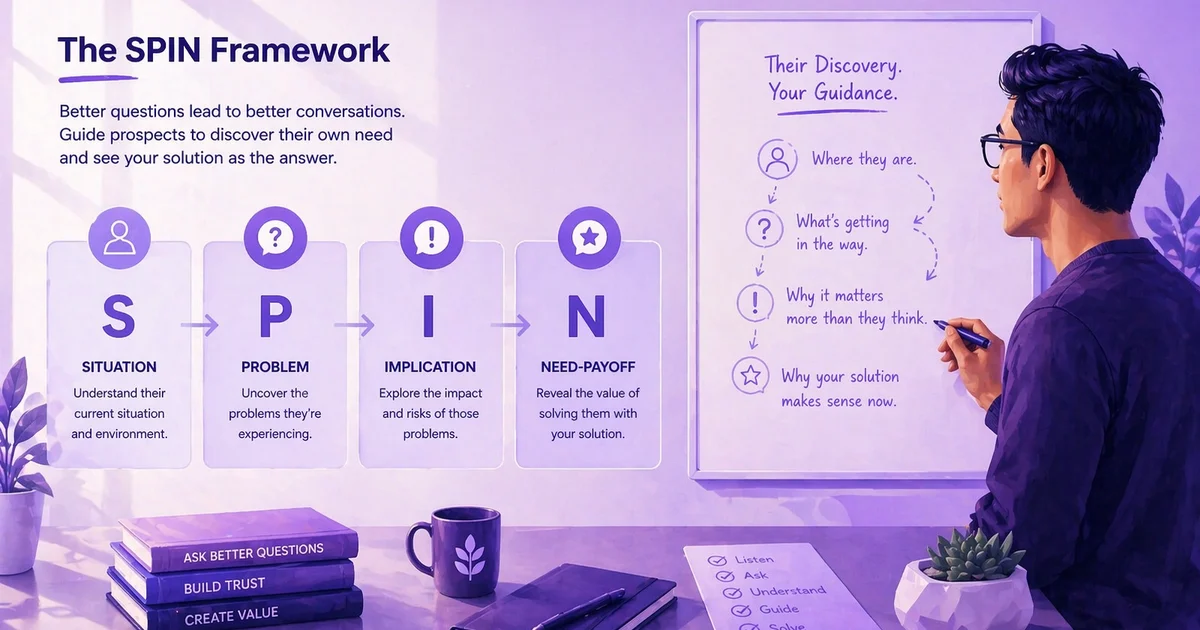
The SPIN framework—Situation, Problem, Implication, and Need-payoff questions—creates a natural progression that helps prospects recognize their own needs while positioning your solution as the logical next step. These four question types don't just gather information; they guide prospects through their own discovery process and demonstrate your expertise in their industry.
Why Most Discovery Questions Fall Flat
Sales teams often approach discovery like a fact-finding mission. They ask about budget, timeline, and decision-making process without understanding the deeper challenges their prospects face. This approach treats symptoms instead of root causes.
The problem isn't that salespeople ask too few questions. Most ask plenty. The issue is asking the wrong questions at the wrong time. Generic discovery questions like "What keeps you up at night?" or "What are your biggest challenges?" produce equally generic answers because they don't demonstrate any understanding of the prospect's specific situation.
When you ask better discovery questions, something remarkable happens. Prospects start to see you as a strategic partner instead of just another vendor. They begin to share real challenges, internal politics, and the true costs of their current situation. This shift changes everything about your sales process.
The SPIN Framework: Neil Rackham's Strategic Approach
Neil Rackham revolutionized sales methodology with his SPIN Selling approach, which identifies four distinct types of questions that work together to create meaningful discovery conversations. Each question type serves a specific purpose in moving prospects from awareness to action.
The genius of SPIN isn't in individual questions—it's in the sequence. You start by understanding the current situation, then uncover problems, explore the implications of those problems, and finally help prospects articulate the value of solving them. This progression feels natural to prospects while systematically building your case.
Effective questioning requires more than memorized scripts. It demands active listening and the ability to adapt your approach based on what you're hearing. The SPIN framework provides structure while allowing for the flexibility that real conversations require.
Situation Questions: Building Your Foundation
Situation questions establish context by uncovering facts about your prospect's current state. These questions help you understand their business model, processes, tools, and organizational structure. Think of them as the foundation for everything that follows.
Examples of strong situation questions include:
- "How do you currently handle [specific process related to your solution]?"
- "Who's involved in decisions around [relevant area]?"
- "What systems are you using now for [specific function]?"
The key is asking situation questions that directly relate to problems your solution solves. Don't waste time on irrelevant background information. Every situation question should give you insight that helps you position your solution more effectively.
Most sales professionals spend too much time on situation questions. Prospects get impatient when they feel like they're being interviewed about basic facts. Use situation questions strategically to gather essential context, then move quickly into problem territory where the real discovery happens.
Research shows that discovery questions must uncover the gap between current state and desired state. Your situation questions should reveal not just what prospects are doing now, but how well their current approach is working for them.
Problem Questions: Uncovering Pain Points
Problem questions identify challenges, frustrations, and difficulties in your prospect's current situation. These questions move beyond surface-level symptoms to understand root causes and their real impact on the business.
Strong problem questions often sound like:
- "What happens when [current system/process] doesn't work as expected?"
- "How much time does your team spend on [manual process] each week?"
- "What's preventing you from [desired outcome] with your current approach?"
The art of problem questions lies in helping prospects recognize issues they might not have fully articulated before. Many prospects know something isn't working optimally, but they haven't quantified the real cost or impact. Your questions should help them see the full picture.
Don't assume prospects will volunteer their biggest challenges. Often, the problems that create the most compelling business case for your solution aren't the obvious ones. Deep problem questions reveal hidden costs, missed opportunities, and strategic limitations that prospects hadn't connected to their current tools or processes.
Effective problem questions also help you understand the organizational impact of current challenges. Is this a departmental issue or something that affects the entire company? Who else feels the pain? Understanding the scope of problems helps you position solutions appropriately.
Implication Questions: Expanding the Impact
Implication questions help prospects understand the broader consequences of the problems you've uncovered. These are often the most powerful questions in your entire discovery process because they help prospects see beyond immediate pain points to strategic implications.
Provoking questions challenge buyers to consider outcomes, impacts, issues, and risks they haven't examined. They help prospects see "the entire picture" beyond immediate symptoms.
Examples of strong implication questions:
- "If you continue with your current approach, what impact might that have on [specific business goal]?"
- "How does this challenge affect your team's ability to [strategic objective]?"
- "What other areas of the business feel the ripple effects of this issue?"
Implication questions create urgency by connecting current problems to future consequences. They help prospects understand not just what's wrong now, but what will happen if nothing changes. This shift from present pain to future risk often provides the emotional catalyst prospects need to take action.
These questions also help you understand the true cost of inaction. Prospects might tolerate current inefficiencies, but they're much more motivated to change when they understand how those inefficiencies will compound over time or prevent them from achieving important goals.
The best implication questions connect operational challenges to strategic objectives. Show prospects how current problems limit their ability to grow, compete, or serve customers effectively. This connection elevates your conversation from tactical problem-solving to strategic partnership.
Need-Payoff Questions: Articulating Value
Need-payoff questions help prospects envision the benefits of solving their problems and articulate the value of change. These questions shift the conversation from problems to solutions while letting prospects sell themselves on the benefits.
Effective need-payoff questions include:
- "If you could eliminate [specific problem], what would that mean for your team?"
- "How would solving this challenge help you achieve [stated goal]?"
- "What would be possible if you didn't have to worry about [current limitation]?"
Need-payoff questions let prospects convince themselves of value by articulating benefits. When prospects describe the positive outcomes they'd experience, they're building their own case for change.
These questions also help prospects quantify value in terms that matter to their organization. Instead of you telling them about benefits, they discover and articulate those benefits themselves. This approach is far more persuasive than any sales presentation.
Need-payoff questions often reveal additional stakeholders who would benefit from solving current problems. When prospects start talking about how solutions would help their colleagues, customers, or other departments, you've identified potential champions and influencers in the decision-making process.
The goal isn't to get prospects to agree with your value proposition—it's to help them develop their own compelling vision of a better future state. When they can clearly articulate what success looks like, they're much more likely to take action to achieve it.
Beyond Sales: Content Creation Gold Mine
The four question types from SPIN Selling don't just improve your sales conversations—they become the foundation for content that truly resonates with your audience. Every question you develop reveals insights about your prospects' challenges, decision-making process, and success criteria.
Turn your discovery questions into blog post topics. Each problem question could become an article that explores that challenge in depth. Implication questions reveal the strategic content themes your audience cares about most. Need-payoff questions help you create content about outcomes and transformations.
Your situation questions reveal the educational content your prospects need. If you're asking about current processes and tools, create content that helps people optimize those same areas. This approach ensures your content addresses real needs rather than assumed pain points.
Use implication questions to develop thought leadership content. These questions reveal the bigger picture trends and challenges your industry faces. Content that explores these strategic implications positions you as someone who understands not just tactics, but business strategy.
Social media content becomes more engaging when it's built on real questions your prospects are asking. Instead of generic tips and motivational quotes, share insights that address the specific situations, problems, implications, and payoffs your audience encounters.
FAQ sections on your website should directly address the questions prospects ask during discovery conversations. This creates a feedback loop where your sales conversations inform your content, and your content pre-qualifies prospects for more productive sales conversations.
Implementing SPIN in Your Sales Process
Start by developing a question bank for each stage of the SPIN framework. Create 5-10 strong questions in each category that specifically relate to the problems your solution solves. This preparation ensures you always have relevant questions ready, even when conversations take unexpected turns.
Practice transitioning smoothly between question types. The flow from situation to problem to implication to need-payoff should feel natural, not scripted. Use phrases like "That's interesting—help me understand..." or "When you mentioned [previous answer], it made me curious about..." to bridge between different question types.
Don't try to use every question in every conversation. The SPIN framework is a guide, not a checklist. Let the prospect's responses determine which questions are most relevant. Sometimes you'll spend more time on implications, other times you'll focus heavily on problems.
Record or take detailed notes during SPIN conversations. The insights you gather become valuable intelligence for follow-up conversations, proposal development, and future content creation. Look for patterns across multiple prospects to identify industry-wide challenges your content should address.
Train your entire team on the framework, not just individual salespeople. When everyone understands how to have strategic discovery conversations, you create consistency across all customer touchpoints. Marketing can create content that supports the sales process, and customer success can use similar questioning approaches to uncover expansion opportunities.
What the Data Says
Sales professionals using structured questioning frameworks report more productive discovery conversations, though specific conversion rate improvements weren't quantified in available research. The qualitative benefits include deeper prospect engagement and more strategic positioning of solutions.
Active listening and adaptability prove more valuable than scripted questioning approaches according to sales methodology research, emphasizing the importance of using frameworks like SPIN as guides rather than rigid scripts.
B2B sales contexts require varied question types to match different information-gathering objectives, with closed-ended questions effective for specific data points and open-ended questions better for uncovering detailed insights about challenges and decision-making processes.
Frequently Asked Questions About SPIN Discovery Questions
Q: How many SPIN questions should you ask in one sales call?
Quality matters more than quantity. Focus on 2-3 strong questions in each category rather than trying to use every question you've prepared. Let the conversation flow naturally while ensuring you gather insights about situation, problems, implications, and needed outcomes.
Q: Should you always follow the SPIN sequence in order?
Not necessarily. While the logical flow goes from situation to need-payoff, experienced prospects might jump directly to discussing problems or outcomes. Follow their lead while ensuring you eventually cover all four areas before proposing solutions.
Q: What's the biggest mistake people make with SPIN questions?
Rushing to solutions before completing the discovery process. Many salespeople get excited when prospects describe problems and immediately start pitching features. Resist this urge—finish exploring implications and helping prospects articulate desired outcomes first.
Q: How do you handle prospects who don't want to answer discovery questions?
Explain the value of the discovery process upfront. Tell prospects that understanding their situation helps you provide more relevant recommendations and avoid wasting their time on irrelevant features. Most people appreciate this approach when they understand the benefit.
Q: Can you use SPIN questions in written communication like email?
Yes, but adapt the approach. Use one or two thoughtful questions per email rather than conducting full discovery via email. SPIN questions work well for qualifying inbound leads or preparing for scheduled calls.
Key Takeaways
- The SPIN framework transforms generic discovery into strategic conversations by following a logical progression from current situation to desired outcomes, with each question type building on the previous one.
- Problem and implication questions are often more powerful than situation and need-payoff questions because they help prospects recognize challenges they hadn't fully articulated and understand the broader business impact of current limitations.
- Your discovery questions become valuable content creation tools—every situation, problem, implication, and need-payoff question reveals topics your audience wants to read about, creating a direct connection between sales insights and marketing strategy.
- Success with SPIN requires preparation and practice, but the framework should guide rather than script your conversations, allowing for natural flow while ensuring comprehensive discovery.
- The real value emerges when you connect operational challenges to strategic objectives, elevating your role from vendor to trusted advisor who understands both current pain points and future business goals.
How Your Brand Blueprint Can Help with This
Your Brand Blueprint's Buyer's Journey section maps out the questions prospects ask at each stage of their decision-making process, giving you the foundation for developing targeted SPIN questions that address real concerns. The Sales Tools section provides client engagement questions and content strategy frameworks that complement the SPIN approach. Together, these sections ensure your discovery conversations align with how your prospects actually think about and evaluate solutions, making every sales call more strategic and productive.
Ready to put this into practice? BrandBlueprint.ai builds your complete brand messaging strategy—including the section that covers exactly what we talked about here.